

*Dr. Sung Jae is the blog pen name used by Yoon Hairline Clinic.*

Female Crown Hair Transplantation · Female Crown Hair Loss · Yoon Hairline Clinic Gangnam

How is female crown hair loss diagnosed, and what is the step-by-step process for crown hair transplantation?

“Board-certified plastic surgeon Dr. Sung Jae Yi, with 20 years of clinical experience, explains the diagnosis and medical therapy of female crown hair loss, as well as the surgical options, indications, and step-by-step process for crown hair transplantation.”

Female Crown Hair Transplantation – Dr. Sung Jae Yi, Board-Certified Plastic Surgeon, Yoon Hairline Clinic
Female Crown Hair Transplantation & Choosing a Female Hair Loss Clinic: Answered Through Peer-Reviewed Data / Dr. Sung Jae Yi, Board-Certified Plastic Surgeon, Yoon Hairline Clinic
0 patients
Yoon Hairline Clinic Strip (FUT) Patients
Direct 1×1 cm Donor Area Counts
0 hairs
Korean Women Without Hair Loss
Occipital Hair Density /cm²
0 hairs
Women with Female Pattern Hair Loss
Hair Density in the Same Zone /cm²
0%
Women with female pattern hair loss
start with a smaller harvestable donor supply
0 hairs
Realistic Single-Session Harvesting Limit
for Female Crown Procedures (Approximate)
Three Conclusions First

In the Exact Order Discussed in Consultation — Three Core Conclusions

If you are researching female hair loss clinics because your crown or hair part looks noticeably thin, this guide follows the exact sequence discussed during an in-person consultation—leading to three core conclusions.

01

First, hair transplantation is currently the only method capable of restoring cosmetically meaningful coverage to areas where hair has already disappeared and the scalp shows through.

02

Second, areas where hair still remains can be protected with medication—and the medications backed by solid clinical evidence are fewer and clearer than most patients realize, with active ingredients and dosing detailed below.

03

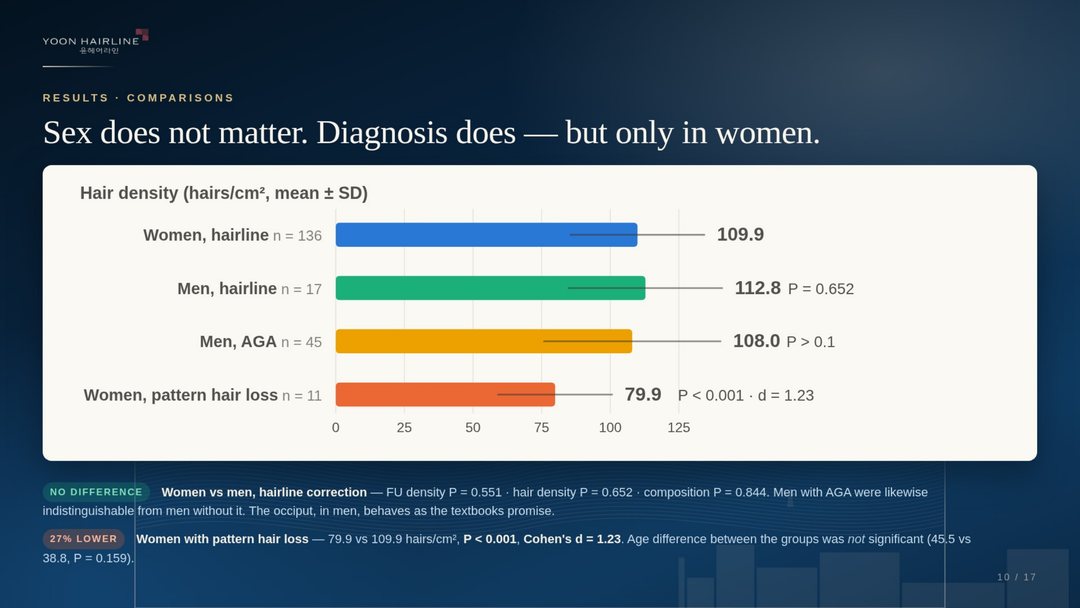
Third, women have a smaller harvestable donor reserve than men. According to direct scalp counts from 209 patients reported by Dr. Sung Jae Yi in peer-reviewed literature, Korean women without hair loss average 109.9 hairs per 1 cm² in the occipital donor area, whereas women with female pattern hair loss average 79.9 hairs in the exact same zone—meaning 27% less donor hair is available to harvest, making the choice of surgeon for your very first female crown transplant carry far greater weight than in male procedures.

Written by a board-certified plastic surgeon who has focused on female hairline and crown hair loss for 20 years, this guide is grounded in peer-reviewed journal data and personal clinical research rather than advertising claims—with all cited references listed at the end so you can use them to evaluate any clinic you consult.

Female Crown Hair Transplantation & Choosing a Female Hair Loss Clinic: Answered Through Peer-Reviewed Data / Over 15 years ago, Dr. Sung Jae Yi presented an FUE (non-strip) approach to female hair transplantation at the International Society of Hair Restoration Surgery (ISHRS).
Before Surgery · What Have You Tried

Female Crown Hair Loss — What Treatments Have You Tried So Far?

Female patients who decide to pursue surgery often share a remarkably similar treatment history: scalp-care clinic memberships, scalp scaling, mesotherapy injections, anti-hair-loss shampoos and supplements, and more recently, scalp Botox—typically arriving at the clinic only after spending millions of Korean won and one to two years on those regimens while hair loss continues to progress and donor reserves shrink, as the data below demonstrates.

That is why this section comes first: if a treatment you are currently receiving appears below, checking its level of clinical evidence is essential before making your next decision.

Scalp Botox.

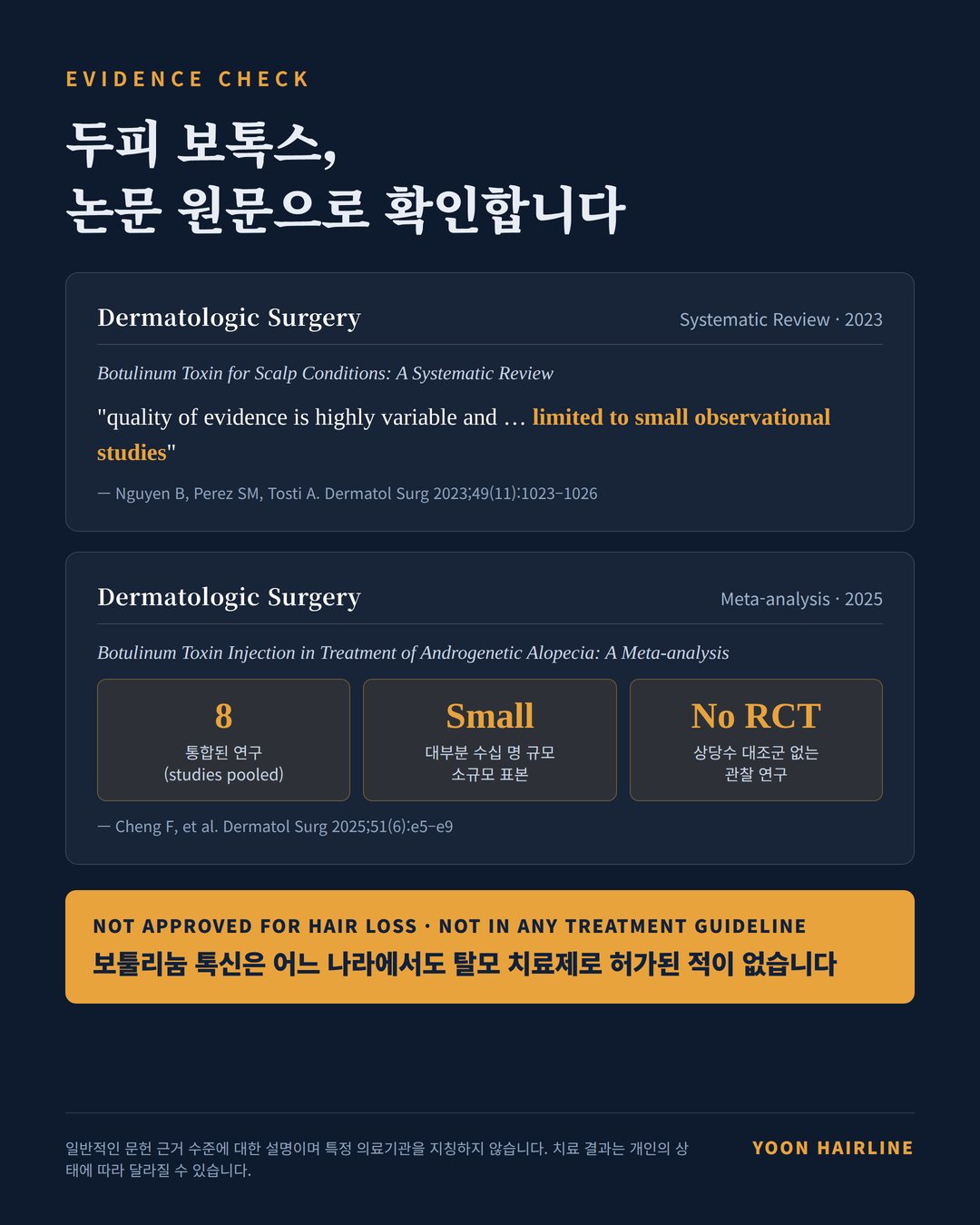
Clinics recommending botulinum toxin injections for hair loss have increased recently. Looking directly at the published literature: a 2025 meta-analysis in Dermatologic Surgery pooled 8 studies and found a statistical signal for increased hair counts, yet most included studies were small cohorts of a few dozen subjects and many were observational studies lacking any control group.

A systematic review in the same journal (2023) rated the overall evidence for botulinum toxin in scalp disorders as “highly variable in quality, with most limited to small observational studies.” Above all: botulinum toxin has never been approved as a hair loss treatment in any country, nor is it listed as standard therapy in any international hair loss clinical guideline. Claims that combining Botox with topical minoxidil accelerates results lack scientific backing, and the more a recommendation relies on personal anecdotes, the more cautious you should be. Evidence-based medicine relies on controlled clinical trials rather than anecdotes.

Female Crown Hair Transplantation – Level of Evidence for Scalp Botox: Verified Through Published Literature — Dermatologic Surgery 2023 · 2025
Level of Evidence for Scalp Botox: Verified Through Published Literature — Dermatologic Surgery 2023 · 2025

Mesotherapy (Scalp Injections). Although among the most frequently recommended procedures in Korean female hair loss clinics, the medical literature is unambiguous: at best, it yields transient changes, with no established evidence that it alters the long-term progression of female pattern hair loss.

Worse still, some hair transplant clinics use these injections as a recurring revenue stream, encouraging repeat payments through plausible-sounding explanations and unverified before-and-after photos. Calculated objectively, simply saving the cumulative money spent on unvalidated scalp treatments can cover the cost of an actual hair transplant—leaving a clear choice between repeatedly buying temporary effects or investing in proven medical care.

Scalp Care & Scalp Scaling. Scalp care literally cleanses the scalp surface. While it may help relieve surface conditions such as seborrheic dermatitis, there is no evidence that it alters the course of female pattern hair loss driven by follicle miniaturization—a clean scalp and regrowing miniaturized follicles are two separate issues.

Anti-Hair-Loss Shampoos & Supplements. Unless correcting a documented nutritional deficiency, shampoos and supplements have not demonstrated clinical evidence capable of halting the progression of female pattern hair loss—shampoo manages scalp hygiene, not follicular miniaturization.

When evaluating any treatment, ask just three questions: Is it approved by regulatory agencies (FDA / MFDS)? Is it included in international clinical practice guidelines? Is it supported by controlled clinical trials? For female pattern hair loss, only the medications detailed below and hair transplantation pass all three tests.

Evidence-based Medication

Evidence-Based Medical Therapy — Active Ingredients and Dosing

Below is a summary of treatments that legitimately qualify as medical therapy for female pattern hair loss (FPHL). This information is educational; starting any oral or topical medication requires a physician’s diagnosis and prescription, as dosing and contraindications depend on your individual medical history.

Topical Minoxidil — The Only FDA-Approved Medication. Topical minoxidil is the only medication approved by the US FDA for female pattern hair loss, with approved female regimens of 2% solution twice daily or 5% foam once daily demonstrating comparable clinical efficacy. Evaluating response requires at least 4 to 6 months, and temporary increased shedding during the first 1 to 2 months reflects resting (telogen) hairs cycling out rather than a reason to stop; because discontinuing treatment reverses the hair density maintained by the medication, it should be started with the understanding that ongoing maintenance is required.

Female Crown Hair Transplantation – Topical minoxidil (brand name: Rogaine Foam) is the only medication approved by the US FDA, and with its patent expired, generic formulations are now readily available in Korea.
Female Crown Hair Transplantation & Choosing a Female Hair Loss Clinic: Answered Through Peer-Reviewed Data / Topical minoxidil (brand name: Rogaine Foam) is the only medication approved by the US FDA for women, and with its patent expired, both original and generic formulations are readily available in Korea.

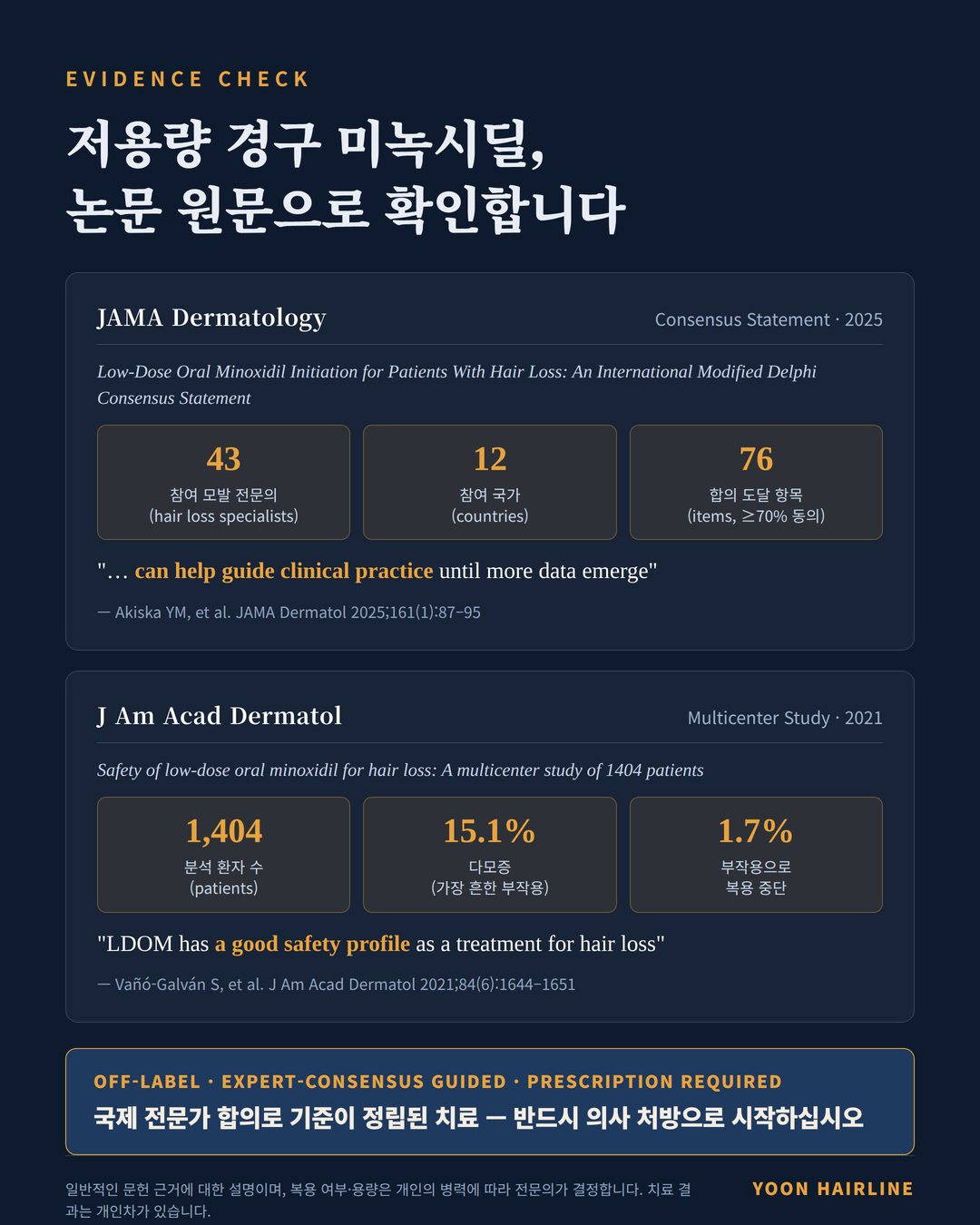
Low-Dose Oral Minoxidil — The Biggest Shift of the Past Decade. For patients unable to continue topical minoxidil due to daily inconvenience or scalp irritation, hair restoration specialists worldwide have established low-dose oral minoxidil protocols. A 2025 international consensus statement in JAMA Dermatology by 43 specialists across 12 countries standardized off-label prescribing criteria, supported by a multicenter safety study of 1,404 patients showing hypertrichosis (unwanted facial or body hair growth) as the most common side effect (15.1%) and a discontinuation rate due to adverse events of only 1.7%. Women typically start at a low daily dose of 0.625–1.25 mg and titrate according to response and tolerability; because minoxidil originated as an antihypertensive agent, patients with cardiovascular history require prior medical evaluation and should never take it without a prescription.

Female Crown Hair Transplantation – Evidence for Low-Dose Oral Minoxidil: JAMA Dermatology 2025 International Consensus Statement · JAAD 2021 Safety Study of 1,404 Patients
Evidence for Low-Dose Oral Minoxidil: JAMA Dermatology 2025 International Consensus Statement · JAAD 2021 Safety Study of 1,404 Patients

Anti-Androgens — Medications Prescribed in the United States. Patients frequently ask what physicians in the United States prescribe for female crown hair loss. In clinical practice and medical literature, oral spironolactone (typically 50–200 mg daily) is widely prescribed for female pattern hair loss, and finasteride (the active ingredient in Propecia) and dutasteride—commonly known as male hair loss medications—have also been extensively studied and prescribed in women. However, because 5-alpha-reductase inhibitors carry teratogenic risks during pregnancy, use in women of childbearing potential requires specialist oversight including pregnancy planning and contraception, whereas they can be considered more readily in postmenopausal women—making female medical therapy far more individualized by age, pregnancy potential, and hormonal status than male regimens.

That defines both the power and the shared limitation of medication: medications preserve existing follicles and thicken miniaturized hair shafts, and consistent use can even reactivate a portion of follicles that had regressed into the resting (telogen) phase, yet medication has little effect on areas that have already been bare for years. For a visibly see-through hair part or a crown that has lost volume, hair transplantation remains the only method capable of restoring cosmetically meaningful fullness—which brings us to the clinical data on surgery.

Fact ① · 209 Korean Donor Scalps

Fact Verified by Peer-Reviewed Data ① — Direct Measurements of Korean Female Donor Areas

Answering “why not simply transplant more hair?” begins with knowing how much donor hair actually exists in the occipital scalp.

Until recently, baseline donor data for Korean women virtually did not exist. From October 2023 to June 2026, Dr. Sung Jae Yi conducted a study in which a single experienced technician completely dissected a 1×1 cm strip of occipital donor scalp from all 209 consecutive strip (FUT) patients at Yoon Hairline Clinic and counted every individual follicular unit (FU) under a microscope—publishing the findings in peer-reviewed literature based on actual physical counts rather than estimates or photo analysis.

Women Without Hair Loss (136 patients)
0 hairs/cm²
Women with Female Pattern Hair Loss (11 patients)
−27%
0 hairs/cm²
ParameterWomen Without Hair Loss (136 patients)Women with Female Pattern Hair Loss (11 patients)
Follicular Unit (FU) Density67.8 ± 12.7 /cm²55.5 ± 11.1 /cm²
Hair Density109.9 ± 24.6 /cm²79.9 ± 21.0 /cm²
Hairs per Follicular Unit (FU)1.62 hairsLower (61.2% 1-hair FUs)
Female Crown Hair Transplantation – FU (n=136) — Conference Slide from 209-Case Direct Measurement Study
Korean Female Donor Reference Values: 67.8 FUs · 109.9 hairs · 1.62 hairs/FU (n=136) — Conference Slide from 209-Case Direct Measurement Study

Two critical findings emerge from this table.

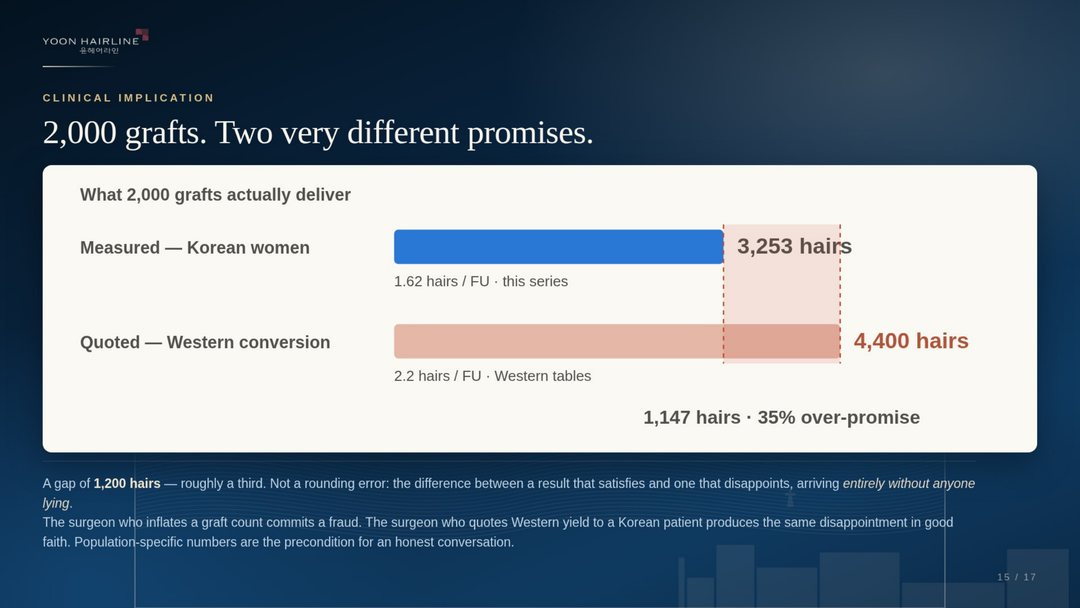
First, Korean women average 1.62 hairs per follicular unit—significantly lower than the Western textbook figure of roughly 2.2 hairs, meaning that even if you are promised “3,000 follicular units,” the actual number of hairs implanted can be over 1,000 hairs fewer than Western conversion formulas predict. These numbers explain why consultations built on Western textbook benchmarks often lead to disappointing density.

Female Crown Hair Transplantation – For the same follicular unit count, Western conversion estimates and direct Korean female hair counts differ substantially — Conference Presentation Slide
For the same follicular unit count, Western conversion estimates and direct Korean female hair counts differ substantially — Conference Presentation Slide

Second—and central to this entire guide—women with female pattern hair loss also experience reduced donor density in the back of the scalp. Not only does overall density drop, but follicular unit composition shifts as well: whereas 2-hair and 3-hair follicular units account for half of all units in women without hair loss, single-hair follicular units surge to 61.2% in women with female pattern hair loss—meaning individual hairs within each follicular unit thin out before the unit itself disappears.

Female Crown Hair Transplantation – Shift in Follicular Unit Composition in Female Pattern Hair Loss: 1-Hair Units Surge to 61.2% — Conference Presentation Slide
Shift in Follicular Unit Composition in Female Pattern Hair Loss: 1-Hair Units Surge to 61.2% — Conference Presentation Slide
Safe Zone · Why the First Surgery Matters

Female Hair Loss Also Affects the Safe Donor Zone — Why the First Surgery Carries So Much Weight

In hair transplantation, the lower occipital scalp is known as the “safe donor zone”—an area relatively resistant to lifelong hair loss so hairs relocated from here persist after transplantation, remaining well preserved even in advanced male pattern hair loss.

However, because female pattern hair loss progresses as diffuse thinning across the entire scalp rather than in a localized pattern, even the donor area widely assumed to be safe thins alongside it—directly proven by the 27% lower donor density measured in the female hair loss group in the study above.

Female Crown Hair Transplantation – Donor Hair Density Comparison by Diagnosis: Significantly Lower Only in Female Pattern Hair Loss (P<0.001) — Conference Presentation Slide
Donor Hair Density Comparison by Diagnosis: Significantly Lower Only in Female Pattern Hair Loss (P<0.001) — Conference Presentation Slide

This biological reality determines how heavily your choice of a female hair loss clinic matters: the recipient area requiring coverage is wide while the harvestable donor supply is narrow, and the same study confirmed that donor density declines further with age (r = -0.23, P = 0.008). A surgery that must make optimal use of an already limited donor reserve in a single session without waste—that is the essence of female crown hair transplantation.

If the initial surgery suffers from poor planning or over-harvesting that damages the donor area, no viable donor material remains to fix it, turning any revision into an even more difficult procedure with a further depleted donor supply—which is why entrusting female crown hair loss to a highly experienced surgeon from the very first procedure is grounded in numbers, not emotion.

Post-Operative Progress Photos

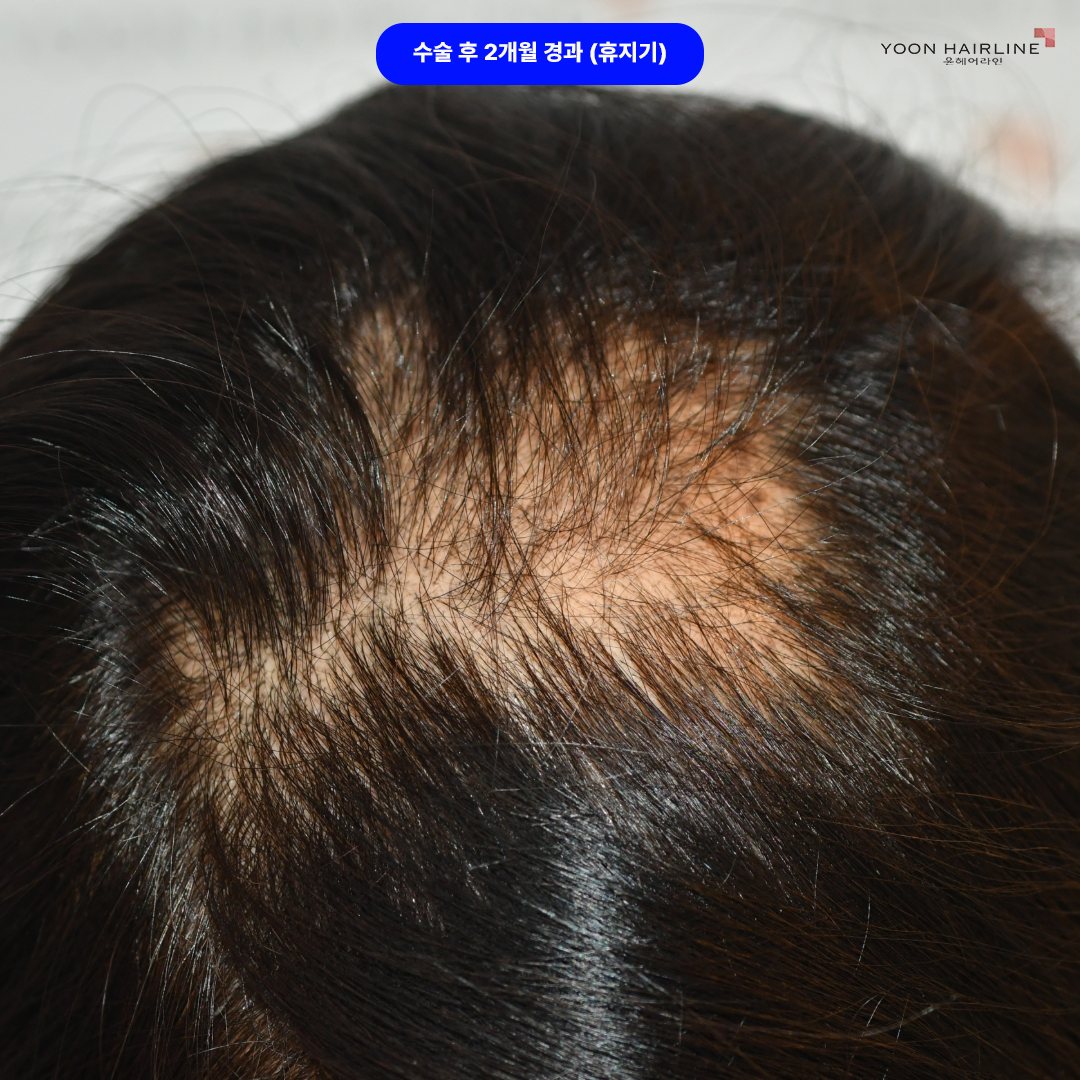
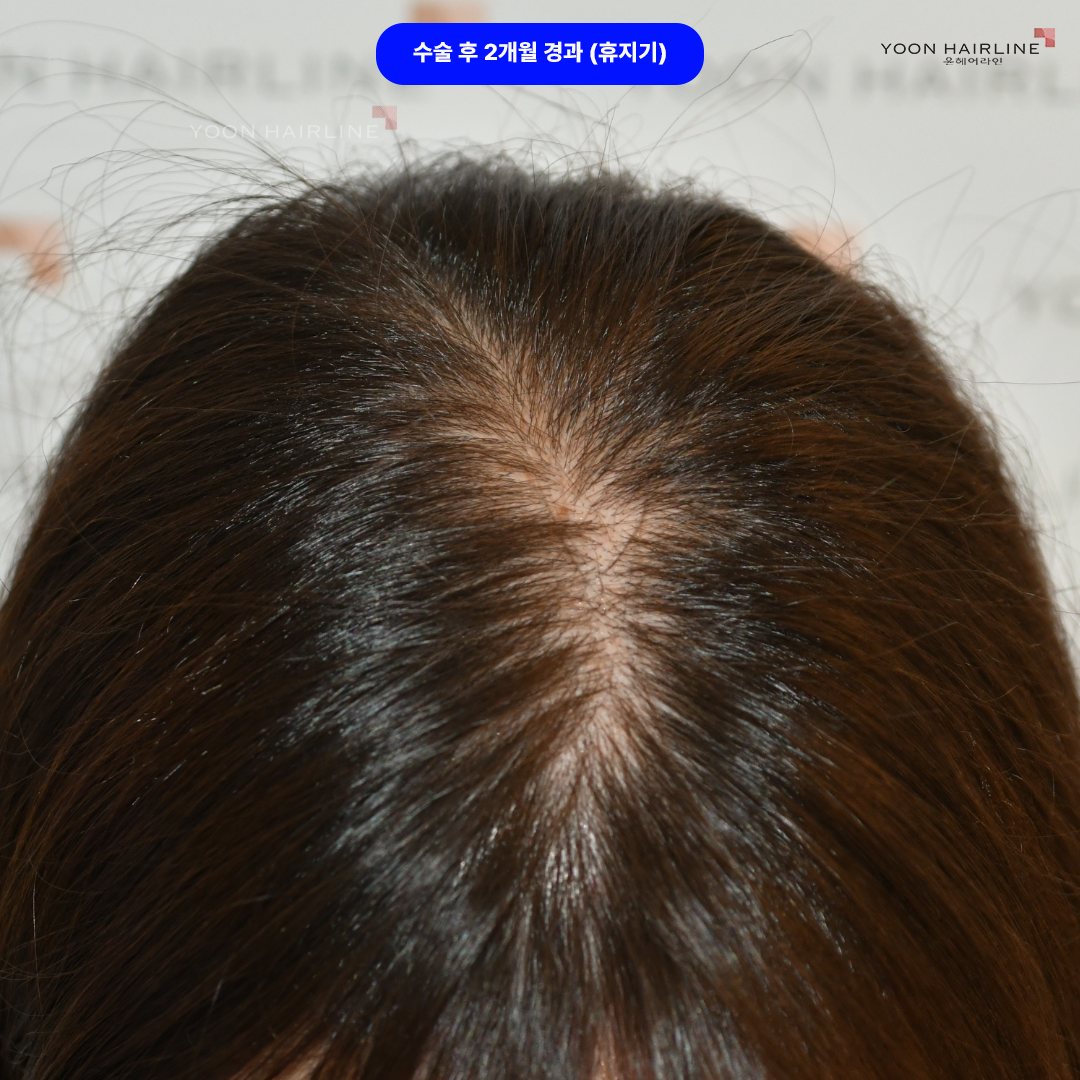
Female Crown Hair Transplantation – During this resting (telogen) phase, it is common for the scalp to temporarily appear similar to its pre-operative state.
2 Months Post-Op / During this resting (telogen) phase, it is common for the scalp to temporarily appear similar to its pre-operative state.
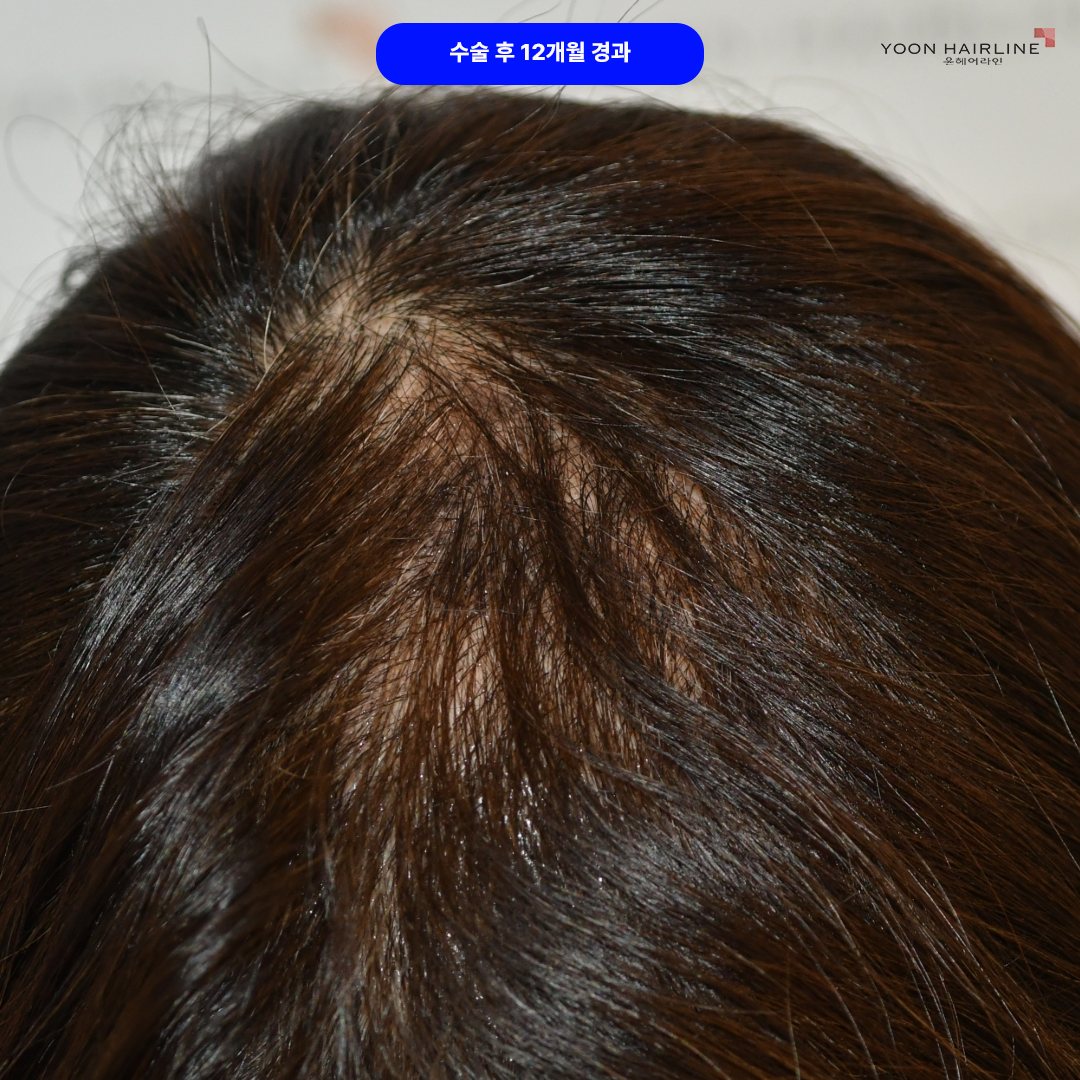
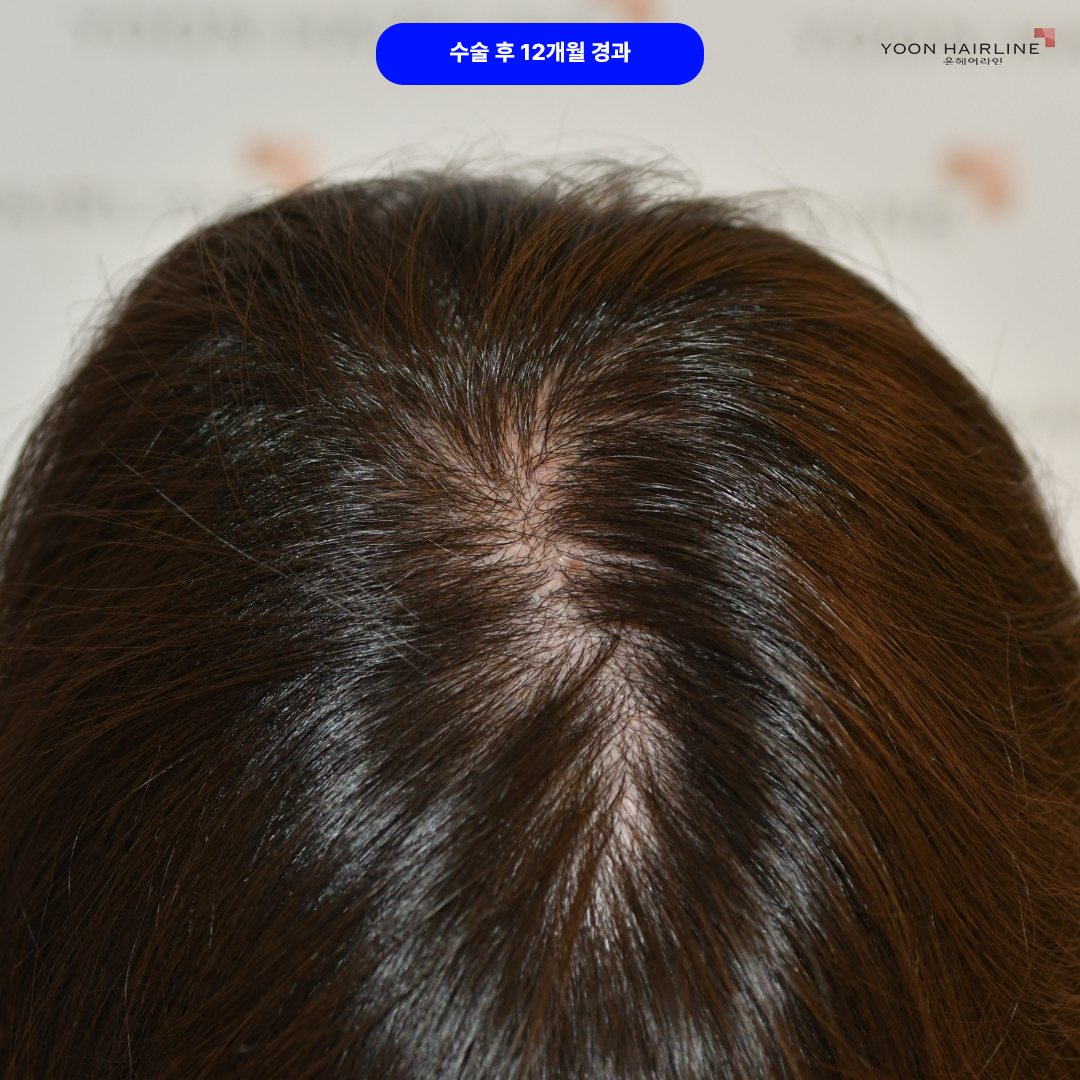
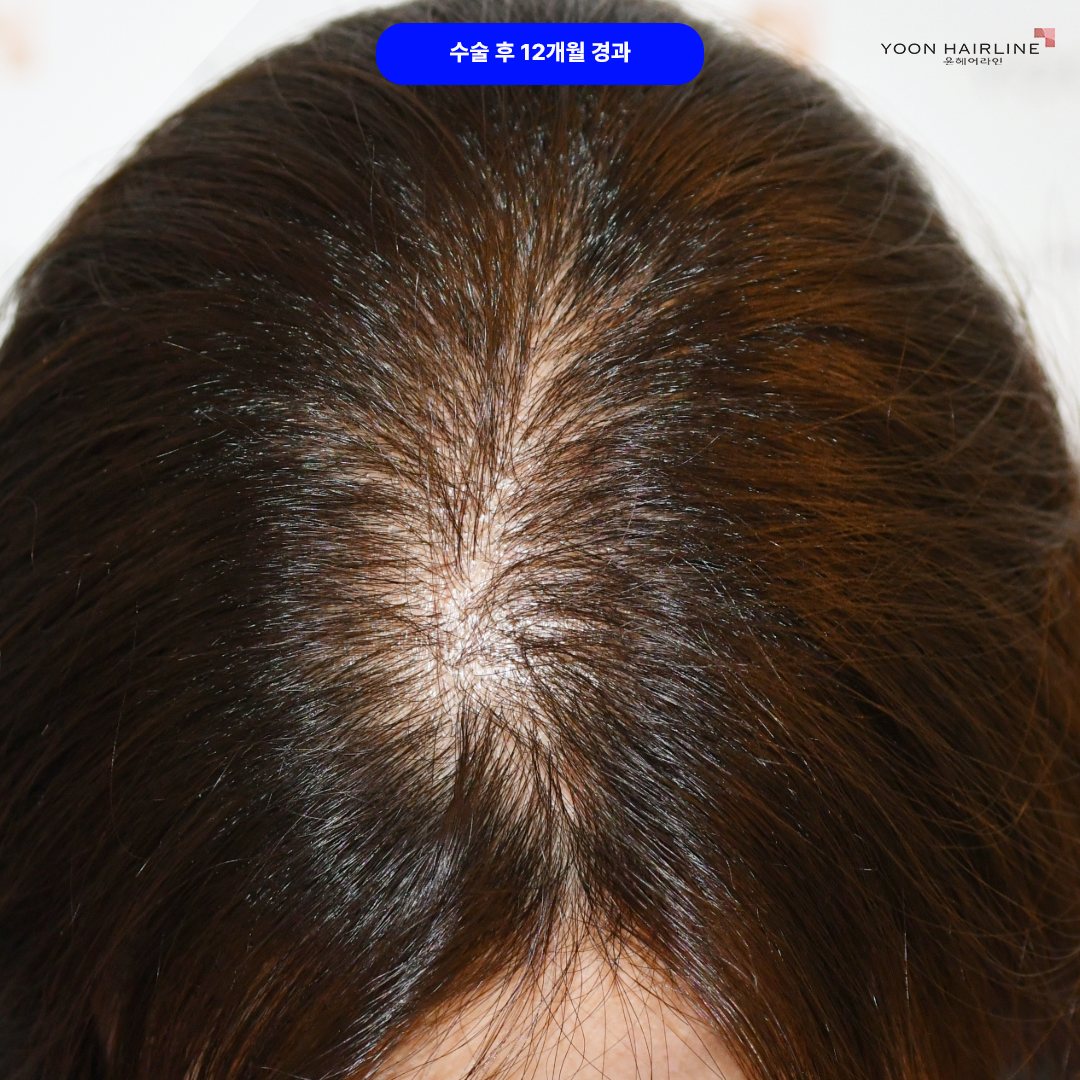
Female Crown Hair Transplantation – 12 Months Post-Op: Transplanted hairs have grown in, eliminating visible scalp show-through and increasing crown volume, with continued volume maturation over the following two years.
12 Months Post-Op / Transplanted hairs have grown in, eliminating visible scalp show-through and increasing crown volume, with continued volume maturation over the following two years.
FUE Pioneer · FUT for the Female Crown

Why a Surgeon with One of the Longest Track Records in FUE (Non-Strip) Insists on Strip (FUT) for the Female Crown

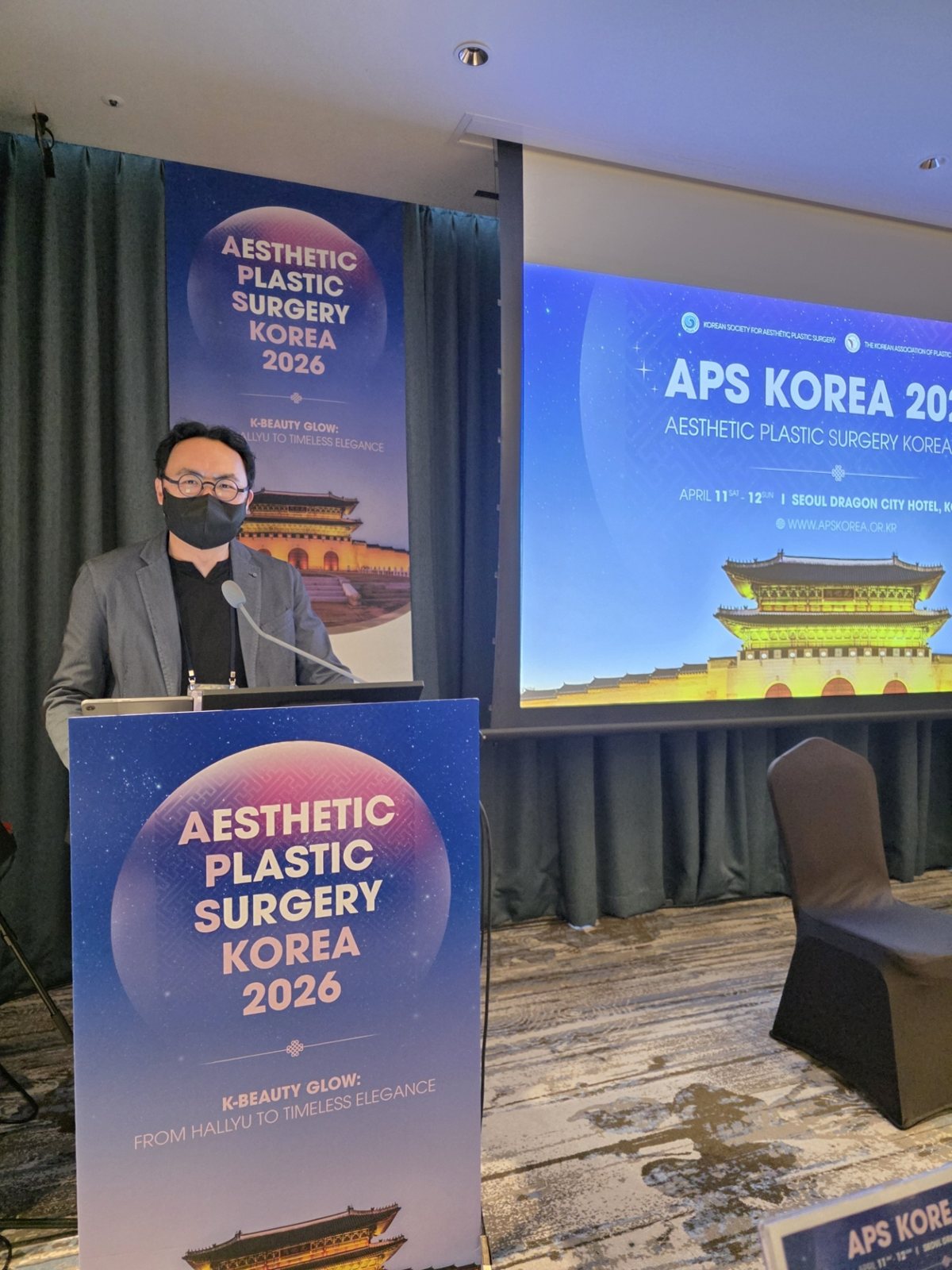
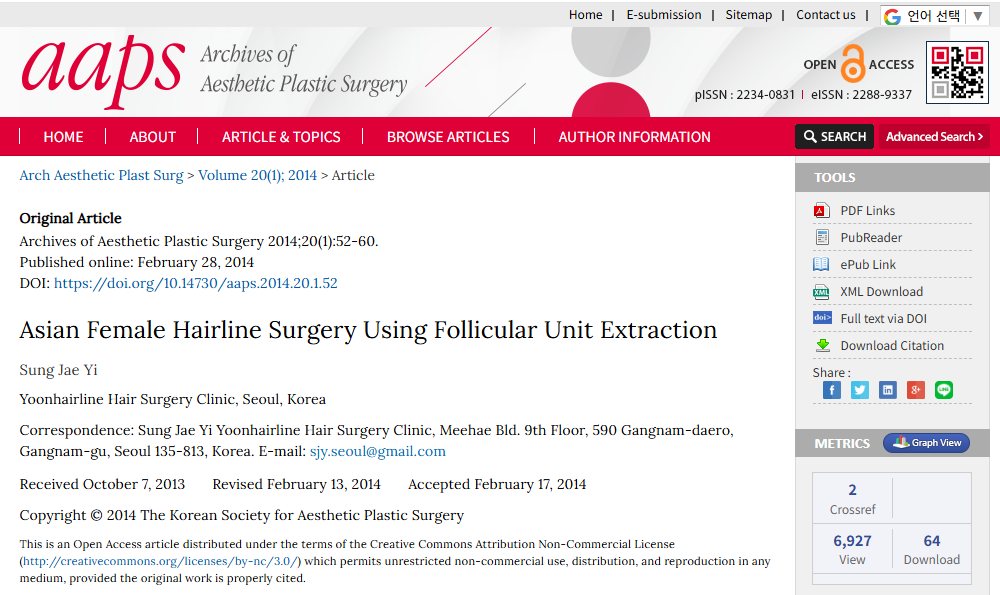
Dr. Sung Jae Yi began performing FUE (non-strip) hair transplantation in 2005—before a dedicated hair restoration society even existed in Korea—reported 78 consecutive cases of FUE Asian female hairline surgery in Archives of Aesthetic Plastic Surgery in 2014, still performs the vast majority of female hairline corrections via FUE, and chairs the hair transplantation session at the 2026 Congress of the Korean Society of Plastic and Reconstructive Surgeons, reflecting a clinical history in female FUE rarely matched in Korea.

Female Crown Hair Transplantation – Female Crown Hair Transplantation &amp; Choosing a Female Hair Loss Clinic: Answered Through Peer-Reviewed Data
Female Crown Hair Transplantation & Choosing a Female Hair Loss Clinic: Answered Through Peer-Reviewed Data
Female Crown Hair Transplantation – Female Crown Hair Transplantation &amp; Choosing a Female Hair Loss Clinic: Answered Through Peer-Reviewed Data
Female Crown Hair Transplantation & Choosing a Female Hair Loss Clinic: Answered Through Peer-Reviewed Data

Even with that extensive FUE background, Dr. Sung Jae Yi states unequivocally: For moderate-to-advanced female crown hair loss, harvesting must be performed via strip (FUT)—this is a firm clinical principle.

The reason is already shown in the data above: because female pattern hair loss thins the donor area as well, extracting follicles one by one via FUE (non-strip) further reduces density between remaining hairs and leaves the donor area irreversibly sparse, whereas strip (FUT) harvests a narrow tissue strip and closes it neatly so density loss is confined to a single fine linear scar concealed beneath upper hair—preserving limited reserves while securing the required hair count.

FUE (non-strip) is an option only when hair loss is very mild or limited to a small, localized transplant along the hair part.

One more warning you must heed: Never accept a proposal to combine strip (FUT) and FUE (non-strip) within the same surgery under the promise of increasing hair counts.

Extracting individual follicles via FUE from a donor area that has already had a strip excised doubly damages an already reduced donor density and eliminates any reserve for future procedures—exhausting a patient’s final donor resources just to inflate immediate hair numbers, a pattern Dr. Sung Jae Yi sees repeatedly in revision consultations.

Post-Operative Progress Photos

Female Crown Hair Transplantation – The transplanted hairs are in the resting (telogen) phase, and active regrowth begins only after roughly 3 to 4 months in this resting phase.
As crown hair loss progresses, hair shaft miniaturization (thinning) occurs first. 9 Weeks Post-Op / The transplanted hairs are in the resting (telogen) phase, and active regrowth begins only after roughly 3 to 4 months in this resting phase.
Female Crown Hair Transplantation – 12 Months Post-Op: Compared to the resting (telogen) phase, total hair volume in the crown has visibly and measurably increased in direct proportion to the transplanted volume.
12 Months Post-Op / Compared to the resting (telogen) phase, total hair volume in the crown has visibly and measurably increased in direct proportion to the transplanted volume.
The Procedure, Step by Step

How the Surgery Is Actually Performed — Step-by-Step Crown Transplantation

To answer “aren’t all hair transplants basically the same?”, here is how crown transplantation is actually performed step by step—use this sequence as a benchmark at any clinic consultation to see where real surgical skill differs.

  1. 01

    Harvesting — Strip (FUT) Is the Principle, Without Head Shaving. For the reasons detailed above, moderate-to-advanced crown hair loss is harvested via strip (FUT) without shaving the head—closing the strip site with absorbable sutures so no stitch removal is needed and upper hair naturally covers the closure line, a suture-free healing method Dr. Sung Jae Yi presented in the female hair transplantation session at ISHRS 2012 that significantly reduces discomfort and eliminates the poking pain caused by conventional nylon sutures.

    Harvest volume is determined by direct measurement of scalp laxity and donor density, with a realistic single-session limit of around 3,500 hairs for female crown procedures—and in clinical practice, even 3,500 hairs is frequently unachievable, so any consultation promising significantly higher counts warrants scrutiny of its evidence.

  2. 02

    Dissection & Placement — Crown Surgery Is About Density. Harvested follicular units are dissected and sorted under a microscope, where surgical planning for the female crown differs completely from hairline restoration.

    In hairline restoration, creating a soft border gradient with fine (vellus-like) hairs to achieve maximum naturalness is the primary measure of surgical success.

    In contrast, crown and hair-part transplantation must create maximum visual density from a limited hair count—requiring meticulous dissection to preserve 2-hair follicular units and, when needed, applying combined follicular unit implantation (combining two 1-hair follicular units into a single recipient site rather than planting them singly), a technique Dr. Sung Jae Yi reported at the 2019 Congress of the Korean Society of Plastic and Reconstructive Surgeons.

    This method increases perceived visual density from the exact same harvested hair count—a technique impossible with implanters and achievable only with recipient-site slits, which Dr. Sung Jae Yi also uses in female hairline surgery to bridge the transition between single-hair and two-hair units smoothly.

    That is both why Yoon Hairline Clinic adheres 100% to the recipient-site slit technique and one of its signature surgical methods.

  3. 03

    Recipient-Site Slits — Where Decisive Differences in Outcome Are Made. Creating slits forms the recipient sites for each follicle and is the stage to which Dr. Sung Jae Yi devotes the greatest focus, performing every slit personally from start to finish.

    The crown is a whorl where hair direction spirals outward; recipient-site slits must be angled and placed at the exact depth matching existing hairs between living follicles so transplanted hairs lie naturally flat—if angled too upright, they look transplanted, and if existing follicles are transected, native hair is lost, making female crown surgery far more demanding than transplanting into a bare male scalp and dependent on the surgeon’s hands rather than equipment.

  4. 04

    One Year Post-Op — Knowing the Timeline Prevents Unnecessary Worry. Surgery is performed under local anesthesia, with duration varying by hair count; tiny crusts form on the recipient area and shed within a few days, followed by a normal shedding phase as the transplanted hairs enter a resting (telogen) phase after surgery to adapt to their new site.

    Once the resting (telogen) phase passes, hairs regrow gradually over several months, with final results typically evaluated between 6 months and 1 year; surrounding native hairs may also enter a temporary resting phase due to surgical stimulation but generally recover, though temporary discomfort such as pain, swelling, itching, or altered sensation—and rarely infection or other complications—can occur and should be discussed promptly with the clinic, as healing speed and graft survival vary by individual.

Post-Operative Progress Photos

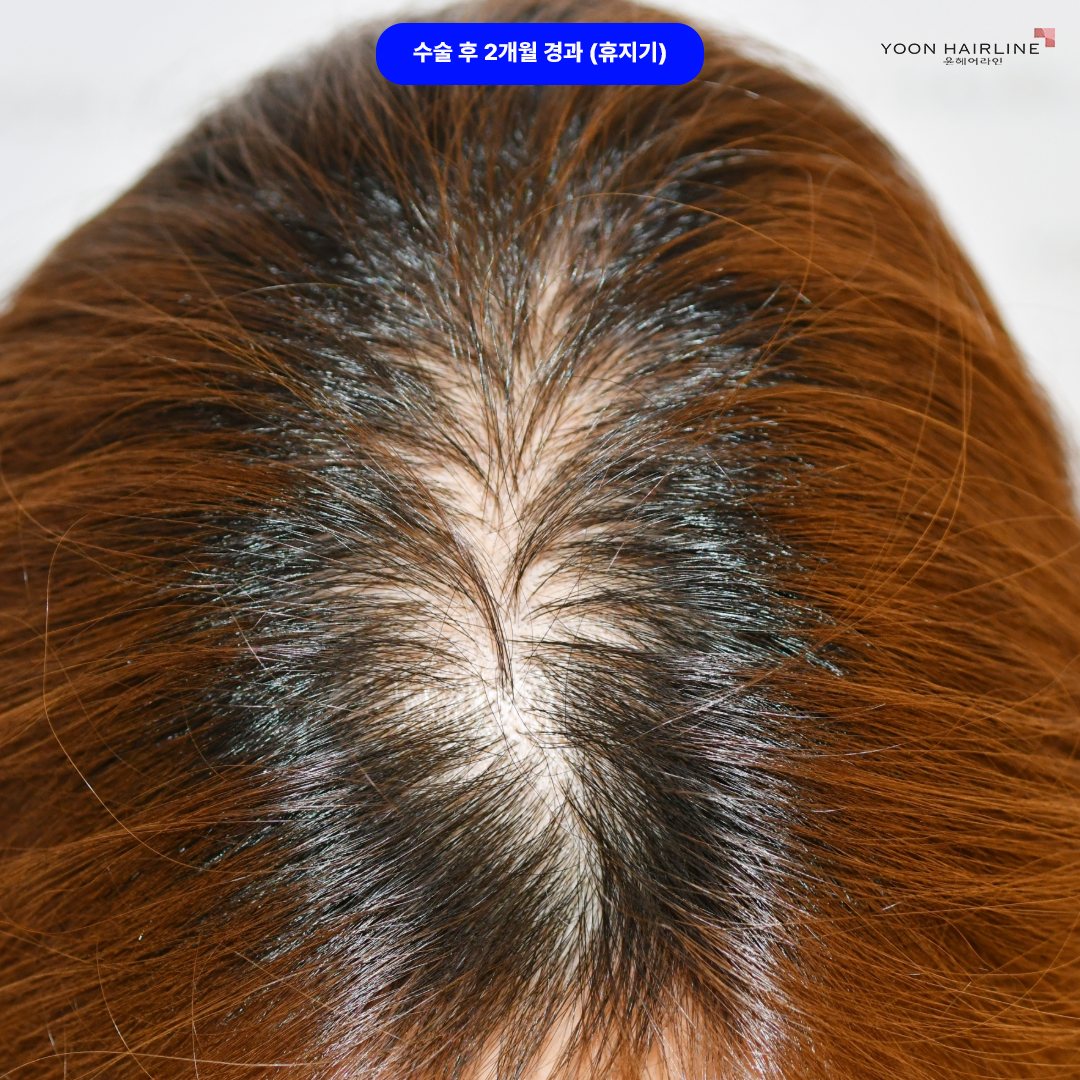
Female Crown Hair Transplantation – Resting (Telogen) Phase: While a small portion of transplanted hairs begin growing immediately, over 70% enter the resting (telogen) phase, making the scalp temporarily appear as it did before surgery.
9 Weeks Post-Op / Resting (Telogen) Phase: While a small portion of transplanted hairs begin growing immediately, over 70% enter the resting (telogen) phase, making the scalp temporarily appear as it did before surgery.
Female Crown Hair Transplantation –
12 Months Post-Op /
Five Criteria for Choosing a Clinic

5 Criteria for Choosing a Female Hair Loss Clinic

Translating the clinical data above into practical clinic selection standards yields five criteria—regardless of which clinic you choose, any clinic that answers all five clearly is worth consulting.

1

Criterion 1 — Does the clinic measure the donor area directly without exaggerating or misrepresenting harvestable hair counts?

Simply examining the scalp with a trichoscope or magnifying camera does not reveal how many follicles or hairs can actually be harvested, even though clinics routinely exaggerate what a scalp scope can show.

Clinics lacking genuine clinical experience often act as if a scalp camera uncovers hidden secrets, yet both in Korea and internationally, examining the scalp under magnification reveals only two things: scalp hygiene condition and visible follicular unit openings.

Far more important is whether the surgeon states the total harvestable hair count accurately with clinical evidence—and because it is hard for patients to tell whether a provider is bluffing or speaking from real data, two practical checks help distinguish them.

First, rule out any clinic claiming it can harvest over 4,000 hairs in a single session for moderate-to-advanced female hair loss.

Given the average scalp density of Korean women, harvesting more than 4,000 hairs at once in a female hair loss patient is almost never biologically possible, meaning such claims are very likely inaccurate.

Second, be cautious if a clinic tries to persuade you to combine strip (FUT) and FUE (non-strip) in the same session to implant more hairs.

As emphasized repeatedly, unlike male pattern hair loss, female pattern hair loss does not preserve donor density in the back of the scalp—even if it looks adequate today, overall occipital density tends to decline as hair loss progresses, making strip (FUT) essential.

Relying on promises of scarless harvesting during a first surgery frequently damages a precious donor zone capable of yielding 3,000 hairs while failing to harvest even 1,500 hairs intact.

Always remember that especially in female pattern hair loss, the very first surgery uses the patient’s best donor follicles—making consultations that promise arbitrary hair counts before honestly assessing what your donor area can safely yield unreliable.
2

Criterion 2 — Are the surgeon’s experience and expertise in female surgery documented in verifiable records?

Look beyond website marketing copy to conference presentations, peer-reviewed papers, and surgical history—paying attention to the caliber of the societies themselves, since presenting as an invited speaker and serving as session chair at congresses exclusive to board-certified plastic surgeons carries completely different weight from commercial meetings anyone can attend by paying a fee.

Furthermore, listing unrelated administrative titles—such as executive board member or insurance review director of a local medical association—in a surgical profile indirectly signals a lack of dedicated academic credentials in hair restoration.

Even more important than conference presentations is whether the surgeon has published peer-reviewed papers, which must pass far stricter scientific scrutiny before acceptance.

Among plastic surgeons who previously worked at university hospitals, some appear as co-authors simply from supervising residents’ papers—and while performing aesthetic surgery well and publishing papers are distinct skills, true authority among aesthetic plastic surgeons requires a higher benchmark:

At least one peer-reviewed paper in an internationally indexed journal grounded in deep clinical mastery of a specialty pursued for over 20 years.

Whether a surgeon holds such publications is easy to verify on their website, because publishing in peer-reviewed hair restoration journals is exceptionally rigorous and any surgeon who has achieved it will prominently feature it—and in female crown surgery, that gap in experience translates directly into a gap in results.

3

Criterion 3 — Does the surgeon understand harvesting principles for the female crown?

For moderate-to-advanced female crown hair loss, strip (FUT) is the standard harvesting principle, with FUE (non-strip) reserved as a secondary option for mild, localized cases—so if a clinic recommends FUE first or proposes combining strip and FUE in this setting, question whether it reflects limited surgical skill or priorities other than preserving your donor area.

4

Criterion 4 — Does a proven, experienced surgeon perform the procedure from start to finish?

The standard is not merely “performed by a doctor,” but “performed personally by a proven surgeon”—because in high-volume factory-style clinics, crown transplantation is sometimes treated as an entry-level procedure for junior doctors on the assumption that the back of the head is less noticeable, a pattern seen repeatedly in revision consultations.

In reality, the exact opposite is true: implanting between living hairs while matching natural crown whorl angles demands some of the most delicate surgical hands in hair restoration, so always verify who will design your surgery and create your recipient-site slits, along with their exact experience.

5

Criterion 5 — Does the clinic proactively explain the full one-year post-operative course? An honest clinic explains the transplanted hairs entering a resting (telogen) phase after surgery, temporary shedding of surrounding native hairs, recovery timelines, and the need for concurrent medical therapy before you even have to ask.

Female Crown Hair Transplantation & Choosing a Female Hair Loss Clinic: Answered Through Peer-Reviewed Data
Video

Female Crown Hair Transplantation & Choosing a Female Hair Loss Clinic: Answered Through Peer-Reviewed Data

The amount of hair that can actually be harvested in female hair loss transplantation is biologically limited, yet some clinics exploit patients’ desire for maximum coverage by claiming impossible harvest numbers—which is why harvestable hair limits are explained here based on the most recent peer-reviewed data.

Korean Female Hair Transplantation Study — Analysis of 209 Cases (2023–2026)

22 Years on Record

A 22-Year Record — Verified by Years and Milestones, Not Ads

Having emphasized verifiable records in Criterion 2, here is Dr. Sung Jae Yi’s chronological clinical and academic record.

  • 2005— Began performing FUE (non-strip) hair transplantation (before a dedicated hair restoration society or study group even existed in Korea)
  • 2006— Performed FUE (non-strip) megasessions exceeding 3,000 hairs
  • 2009. 8— Developed Epidermal Growth Factor (EGF) solution dedicated to hair transplantation (in collaboration with Daewoong Pharmaceutical’s research team)
  • 2009. 11— Achieved successful transplantation of the finest hairs, fine (vellus-like) hairs
  • 2010. 9— Passed the Diplomate of the American Board of Hair Restoration Surgery (ABHRS) examination
  • 2011. 9— Delivered the first report at the International Society of Hair Restoration Surgery (ISHRS) on Asian female hairline surgery and fine (vellus-like) hair transplantation
  • 2014— Published 78 consecutive cases of FUE (non-strip) Asian female hairline surgery in Archives of Aesthetic Plastic Surgery
  • 2026— Direct measurement study of donor hair density in 209 Korean women in Archives of Aesthetic Plastic Surgery
    · Chaired the hair transplantation session at the Congress of the Korean Society of Plastic and Reconstructive Surgeons
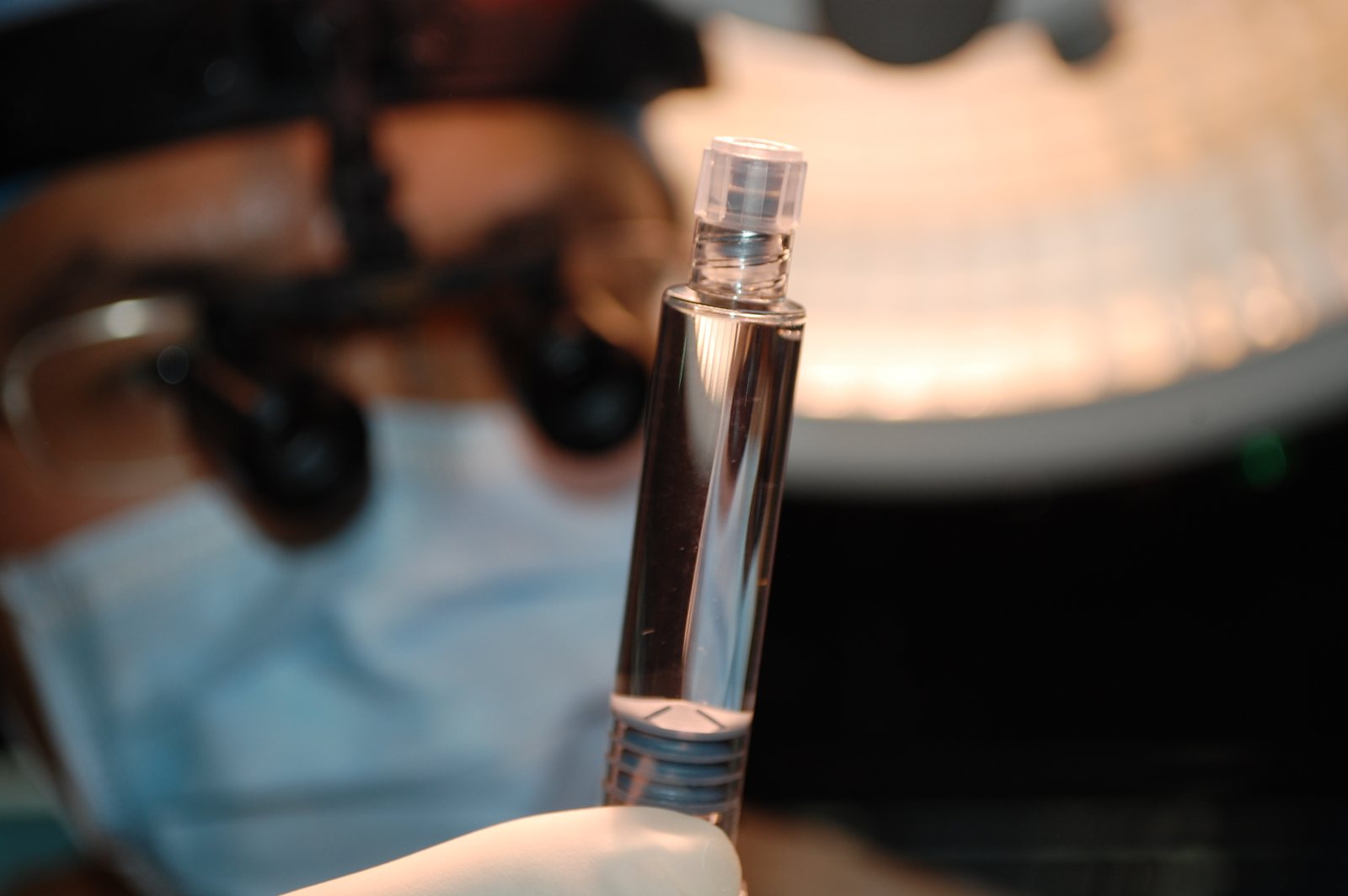
Female Crown Hair Transplantation – Promotional photo taken when the hair-transplant-specific Epidermal Growth Factor (EGF) solution was first successfully developed; holding the initial prototype in the back is Dr. Sung Jae Yi of Yoon Hairline Clinic.
Promotional photo taken when the hair-transplant-specific Epidermal Growth Factor (EGF) solution was first successfully developed; holding the initial prototype in the back is Dr. Sung Jae Yi of Yoon Hairline Clinic.
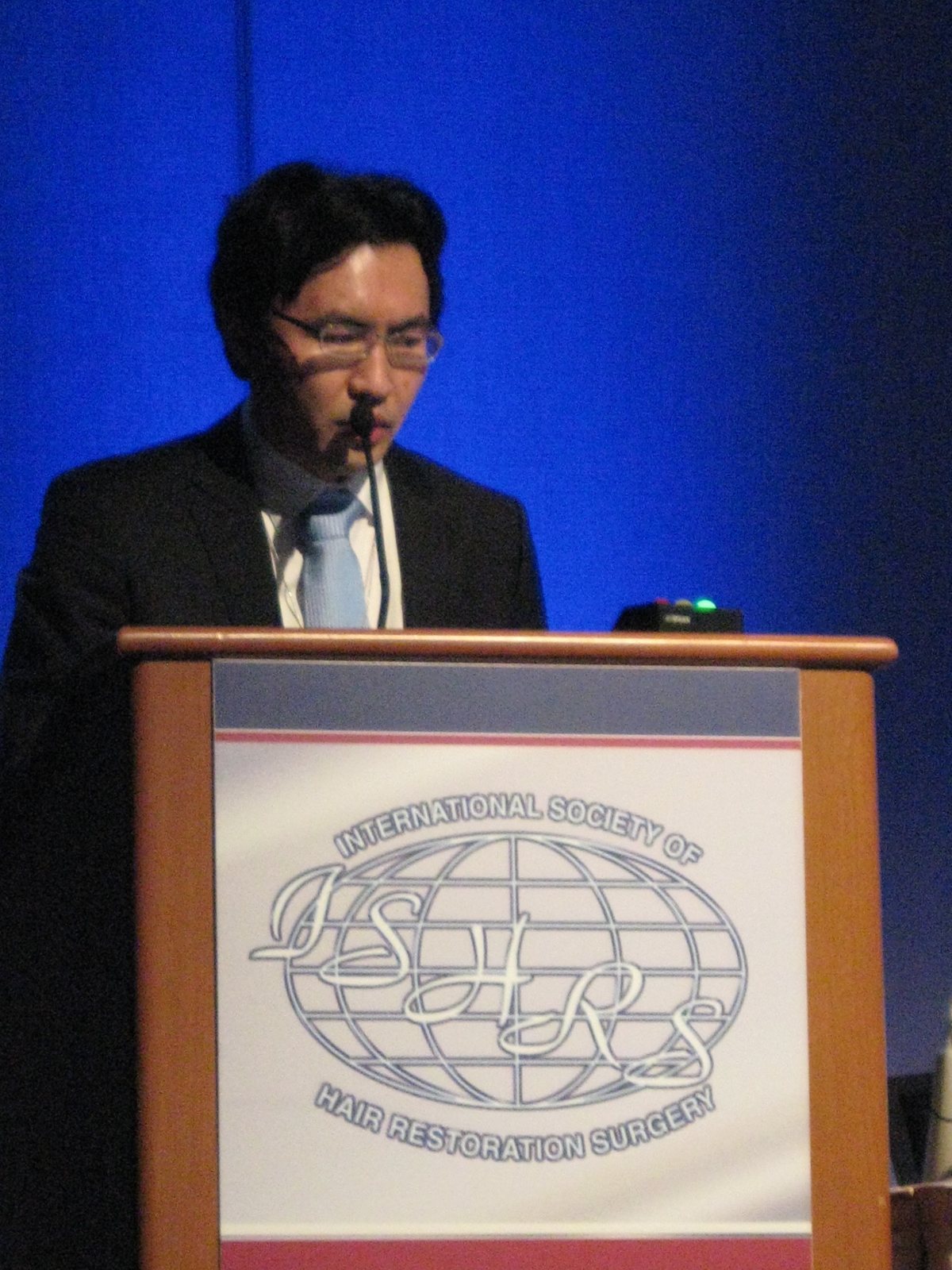
Female Crown Hair Transplantation – Presenting at the 2011 ISHRS Annual Scientific Meeting in the United States
Presenting at the 2011 ISHRS Annual Scientific Meeting in the United States
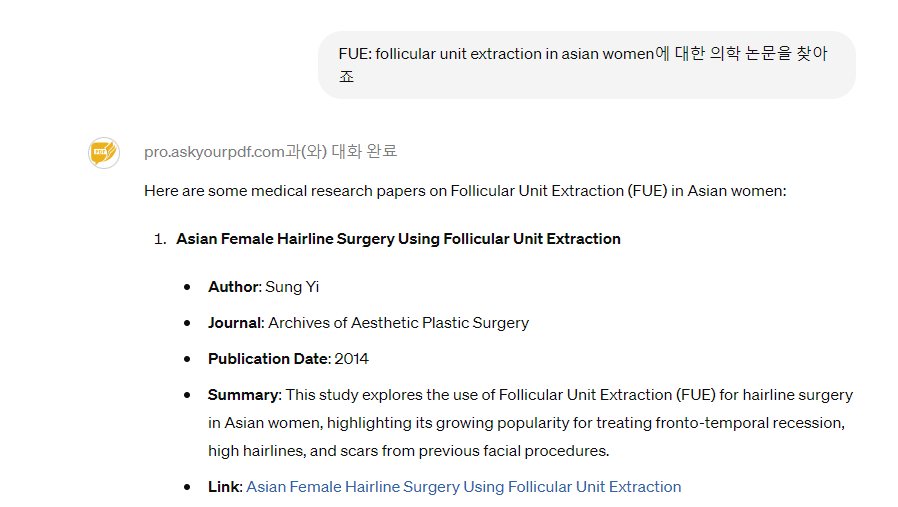
Female Crown Hair Transplantation – Even in current GPT academic literature searches, Dr. Sung Jae Yi's AAPS paper is recommended first in the field of Asian female hair transplantation.
Even in current GPT academic literature searches, Dr. Sung Jae Yi’s AAPS paper is recommended first in the field of Asian female hair transplantation.
Cost

Female Crown Hair Transplantation Pricing

Long clinical observation shows that consultations that withhold pricing work against the patient, so Yoon Hairline Clinic lists its exact fixed fees openly—and as explained above, crown hair loss requiring around 3,000 hairs is moderate to advanced and is therefore harvested via strip (FUT), based on the revised August 2026 fee schedule.

Strip (FUT) · 3,000 hairs

0 (KRW 7,700,000)

10% VAT excluded · Revised August 2026 fixed rate

Surgical MethodBenchmark Hair CountFee
Strip (FUT)3,000 hairsKRW 7,700,000 (10% VAT excluded)

For mild hair loss or thinning localized along the hair part where a small FUE (non-strip) transplant is viable, the required hair count varies by individual and is quoted from the fixed fee schedule after diagnosing your donor area and recipient area.

Surgical fees are identical for men and women with no surcharge for the crown—when comparing quotes, compare benchmark hair counts, anesthesia and post-op care inclusions, and VAT notation on equal terms, and if diagnosis shows fewer hairs are sufficient, your fee is reduced proportionally.

Surgical costs vary depending on transplanted hair count and individual scalp condition, with exact fees provided after diagnostic evaluation; hair transplantation is an elective, non-insurance-covered medical procedure.

Diagnosis First

Treatment Sequence — Diagnosis First; Medication and Surgery Serve Different Roles

Summarizing this entire guide in sequence: first, a specialist’s diagnosis confirms your hair loss type, progression stage, and donor area condition; remaining native hair is protected with evidence-based medication, while an already bare hair part or crown is restored through transplantation—and for most patients, medication and surgery complement rather than replace each other, so ongoing medical maintenance is recommended after surgery because native hairs can continue thinning even though transplanted occipital hairs resist hair loss.

Reversing that order—spending budget and time first on unproven scalp treatments before turning to surgery when they fail—not only adds unnecessary treatment costs on top of surgical fees, but also lets your donor reserve shrink in the meantime, so put diagnosis first.

If you would like to understand the underlying causes of crown hair loss, please also read our earlier guide.

Female Hair Loss: Confirm the Underlying Cause FirstCauses of Crown Hair Loss — Female Hair Loss Information Page
Checklist

Pre-Consultation Checklist

Before visiting any female hair loss clinic for a consultation, verify the following points.

  • Does the clinic explain your exact donor hair density with verifiable clinical evidence?
  • Does it honestly state the realistic harvestable hair volume without exaggeration (around 3,500 hairs for the female crown)?
  • Does it adhere to strip (FUT) harvesting for moderate-to-advanced female crown hair loss—be cautious of clinics pushing FUE (non-strip) first or proposing combined strip and FUE harvesting?
  • Are hairline/crown design and recipient-site slits performed personally by a proven board-certified plastic surgeon?
  • Does the clinic establish a concurrent medication plan (such as minoxidil) alongside surgery?
  • Does it proactively explain the full one-year post-operative timeline, including the transplanted hairs entering a resting (telogen) phase after surgery?
Tap each item to check it off.
FAQ

Frequently Asked Questions

Q. A clinic recommended scalp Botox. Should I get it?

Botulinum toxin has never been approved as a hair loss treatment, remains supported only by small-scale studies, and is not listed as standard care in any international clinical guideline—nor do claims that combining it with minoxidil speeds results or practitioner anecdotes constitute scientific evidence, so for active female pattern hair loss, direct your budget toward accurate diagnosis and approved therapies.

Q. Which is better: topical minoxidil or oral minoxidil?

Topical minoxidil (2% solution twice daily or 5% foam once daily for women) is the FDA-approved therapy, whereas low-dose oral minoxidil is an off-label option backed by international specialist consensus that offers higher convenience but requires monitoring for side effects such as hypertrichosis—either way, start only under a physician’s prescription rather than self-medicating.

Q. Can women also take finasteride (Propecia)?

Yes, it is widely prescribed for female pattern hair loss in the United States as well, though it must never be obtained or taken on your own—especially during childbearing years, strict management of fetal teratogenic risk is mandatory, so consult a hair transplant specialist or hair loss physician with a commitment to consistent follow-up before deciding.

Q. Can I try medication first and decide on surgery later?

If you still have substantial native hair and only a narrow area of thinning, starting with medication is the right sequence; however, medication has minimal effect where the scalp is already visibly bare and donor density declines with age (r = -0.23), so having a diagnostic baseline evaluation first is the safest approach.

Q. Will female crown hair transplantation look detectable?

When implanted to match the whorl direction and natural angle of existing hairs, transplanted hairs blend indistinguishably once grown in, though results vary by hair loss stage and donor condition, making an in-person evaluation essential.

Q. Do I need to shave my head?

No—because strip (FUT) is the standard harvesting method, the donor area does not need to be shaved, nor is the recipient area shaved, as shaving the recipient site when implanting between existing hairs should be avoided.

Q. Some clinics claim they can transplant 4,000 or 5,000 hairs. Is that realistic?

In advanced female crown hair loss, harvesting even 3,000 hairs is often impossible, and even at clinics with rigorous harvesting standards, roughly 3,500 hairs is the realistic limit as shown by our direct donor measurements—so if a consultation promises 4,000 hairs or more, verify whether that figure refers to follicles or individual hairs and ask for your exact measured donor density, or treat the claim with caution.

Closing

Closing — Choose a Clinic That Shows Measured Evidence

What female crown hair loss patients lose most is not money, but time—spending one to two years on unproven scalp treatments allows hair loss to progress while donor density diminishes, so bring the three evidence benchmarks (regulatory approval, clinical guidelines, controlled trials) and five clinic selection criteria from this guide to your consultation and choose a clinic that presents measured data rather than marketing claims to protect your one-chance primary surgery.

Female Crown Hair Transplantation – During clinical fellowship training in Boston, USA, Fall 2012
During clinical fellowship training in Boston, USA, Fall 2012
References

References

  1. Yi SJ. Actual graft and hair yield of the donor scalp in Korean women: ex vivo reference values from 209 hair transplantation cases. Archives of Aesthetic Plastic Surgery (2026, accepted).
  2. Yi SJ. Asian Female Hairline Surgery Using Follicular Unit Extraction. Archives of Aesthetic Plastic Surgery 2014;20(1):52-60.
  3. Cheng F, et al. Effects and Safety of Botulinum Toxin Injection in Treatment of Androgenetic Alopecia: A Meta-analysis and Systematic Review. Dermatologic Surgery 2025;51(6):e5-e9.
  4. Nguyen B, Perez SM, Tosti A. Botulinum Toxin for Scalp Conditions: A Systematic Review. Dermatologic Surgery 2023;49(11):1023-1026.
  5. Akiska YM, et al. Low-Dose Oral Minoxidil Initiation for Patients With Hair Loss: An International Modified Delphi Consensus Statement. JAMA Dermatology 2025;161(1):87-95.
  6. Vañó-Galván S, et al. Safety of low-dose oral minoxidil for hair loss: A multicenter study of 1404 patients. Journal of the American Academy of Dermatology 2021;84(6):1644-1651.
  7. Gupta AK, et al. Minoxidil: a comprehensive review. Journal of Dermatological Treatment 2021;33(4):1896-1906.

This article is provided for informational purposes only; any decision regarding oral or topical medication or surgical treatment must be made following a specialist’s diagnosis and prescription. Treatment outcomes and recovery timelines vary by individual scalp condition. Clinical photographs shown are post-operative progress images of patients treated at Yoon Hairline Clinic and do not guarantee identical outcomes. Hair transplantation is an elective, non-insurance-covered procedure; please refer to the clinic’s non-covered fee schedule for details.

Written by: Dr. Sung Jae Yi, Yoon Hairline Clinic (Sung Jae Yi, M.D.)

Consultation

Female Crown Hair Transplantation Consultation —
Diagnosis Comes First

Yoon Hairline Clinic · 9F Mihye Building, 590 Gangnam-daero, Gangnam-gu, Seoul, South Korea · +82-2-517-7940
This page is provided for informational purposes only; medication and surgical decisions require a specialist’s diagnosis and prescription. Hair transplantation is an elective, non-insurance-covered procedure.

상담예약