Yoon Hairline Clinic Reception Desk — A hair transplant clinic backed by peer-reviewed papers and conference presentations
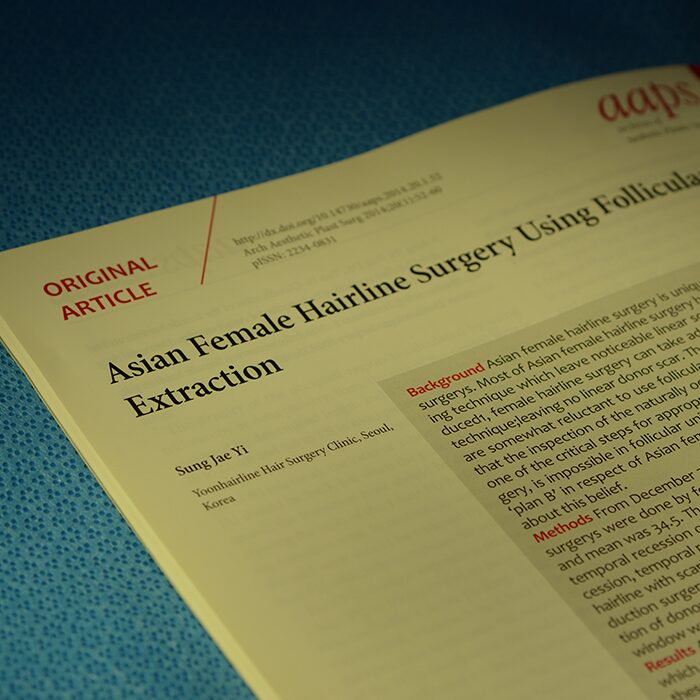
Dr. Sung Jae Yi's paper "Asian Female Hairline Surgery Using Follicular Unit Extraction"
2014 AAPS Paper
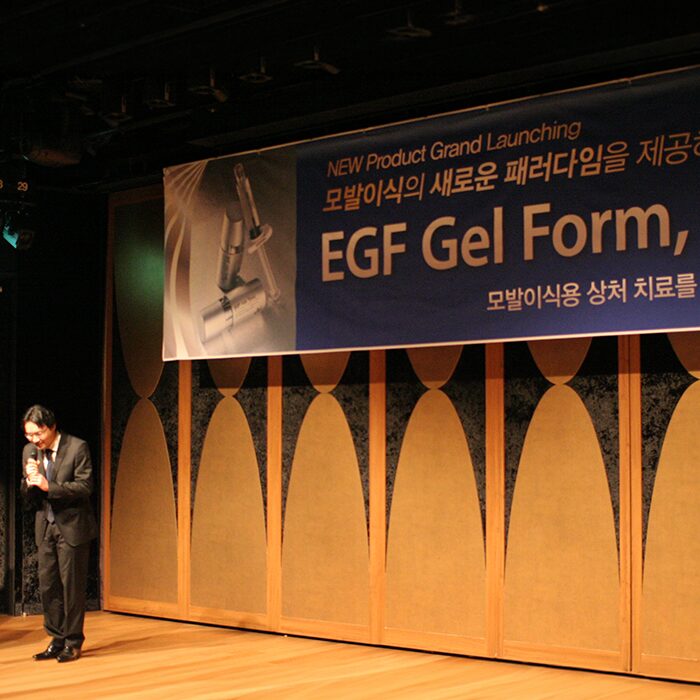
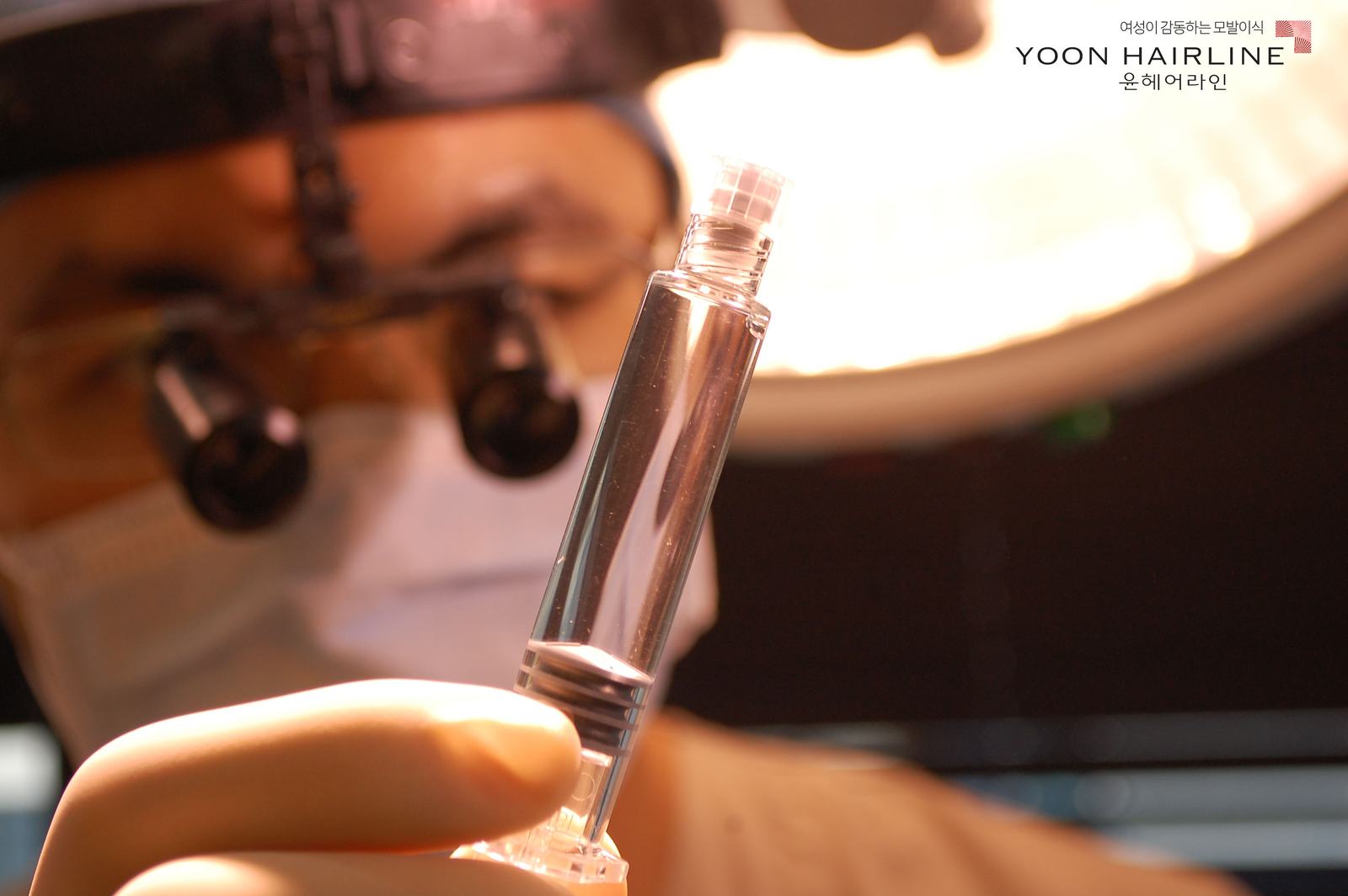
Presentation on Epidermal Growth Factor (EGF) solution dedicated to hair transplantation
EGF Development
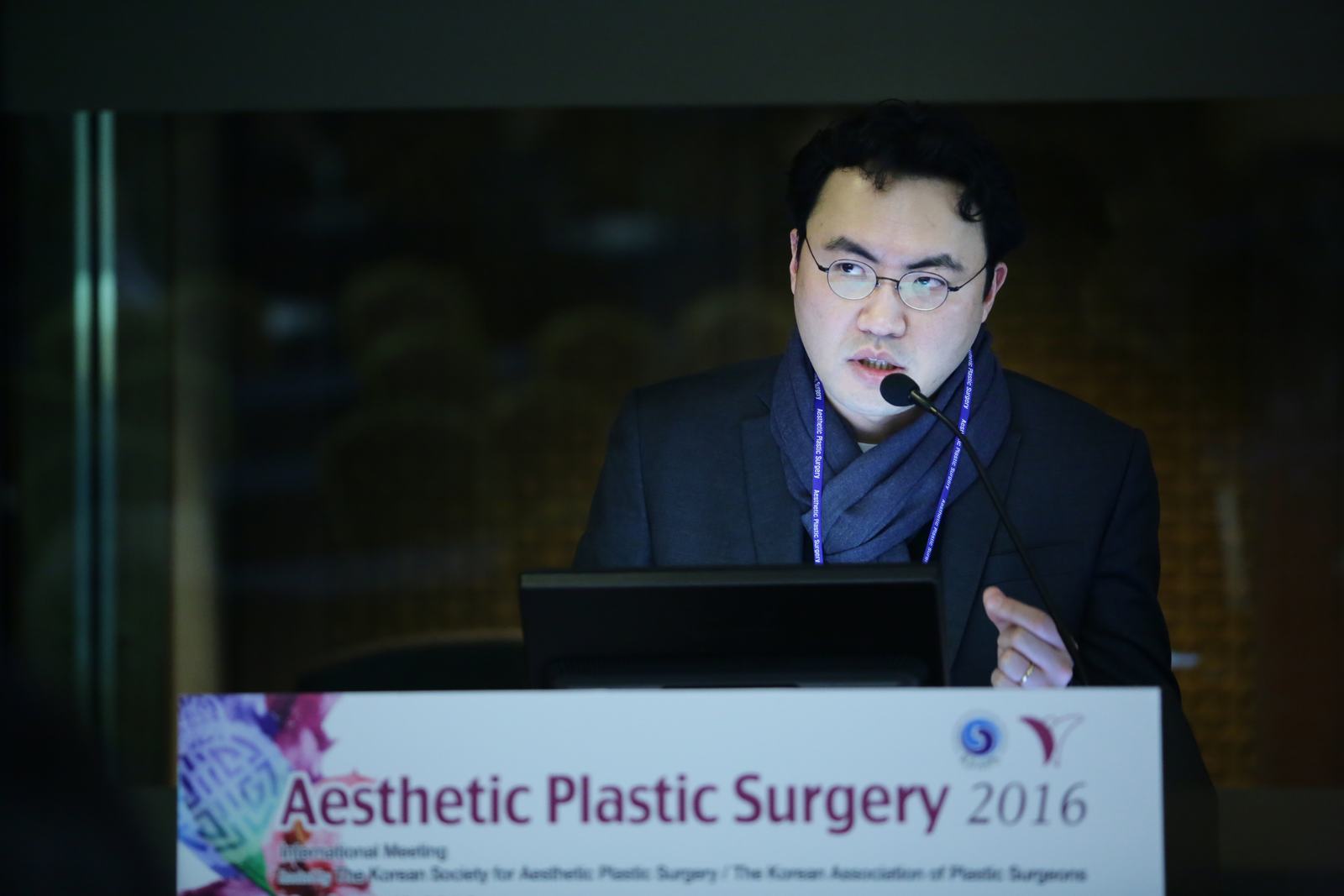
Dr. Sung Jae Yi at the podium of an aesthetic plastic surgery congress
APS Podium

RECORD · 2005 — 2026

Academic & Clinical Achievements of Yoon Hairline Clinic— A 22-year record of peer-reviewed papers and conference presentations by a board-certified plastic surgeon

Surgical skill is proven not by advertising, but through peer validation and documented academic records before fellow specialists.

  • Sole-Author Journal Publication
  • Developer of EGF & EASYMO®
  • Conference Session Chair & Invited Speaker
  • Performed Start-to-Finish by the Chief Director
22 yrsBoard-Certified Plastic Surgeon
Dedicated to Hair Restoration
2005Began Precision
FUE (Non-Strip) Surgery
2011International Society of
Hair Restoration Surgery (ISHRS) Report
2014Sole-Author
Peer-Reviewed Paper
209 casesComplete Follicular Count Study
of Korean Donor Areas
7,000+ casesDocumented & Data-Logged
Surgical Records

RECRecords at a Glance

To an untrained eye, every hair transplant clinic looks the same
That is why verifiable clinical records come before promises

On the surface, a skilled surgeon and an unskilled one appear to use the exact same techniques—the same FUE (non-strip), the same strip (FUT), and the same recipient-site slits. The reason outcomes differ despite using the same techniques is that every clinical judgment and nuance within those techniques is completely different. That difference cannot be seen in advertising copy; it is revealed through conference presentations, peer-reviewed papers, proprietary materials and instruments, and a track record of taking on complex revision cases. Below are eight documented milestones of Dr. Sung Jae Yi, Chief Director of Yoon Hairline Clinic.

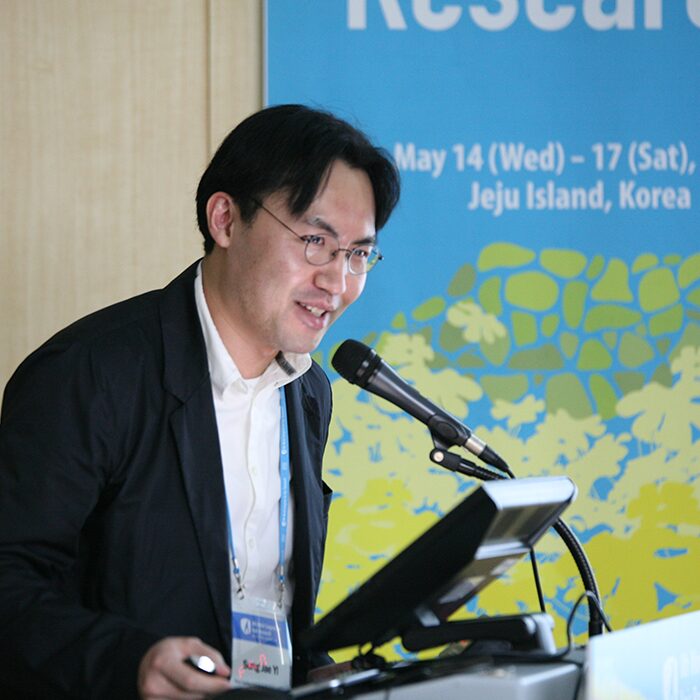
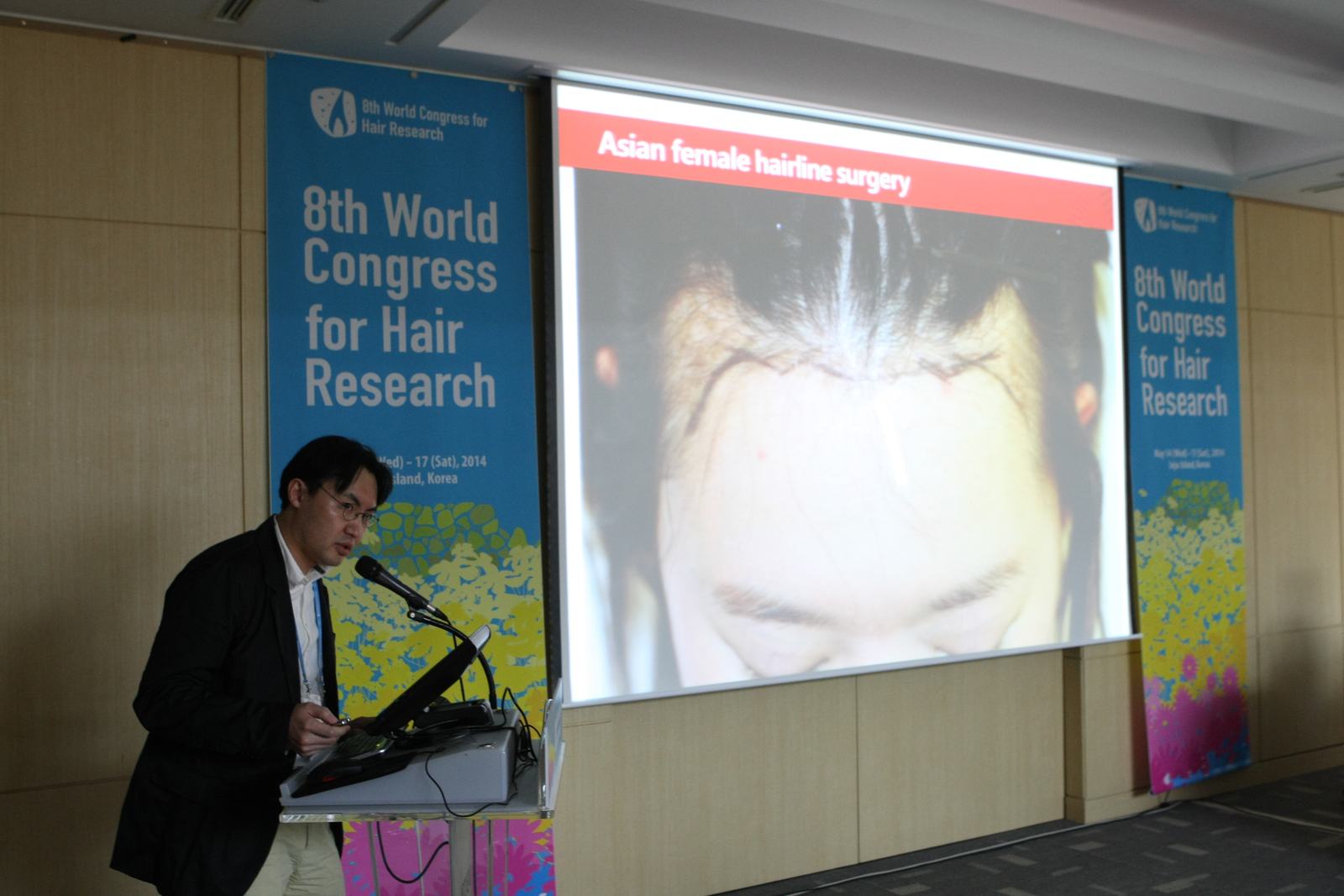
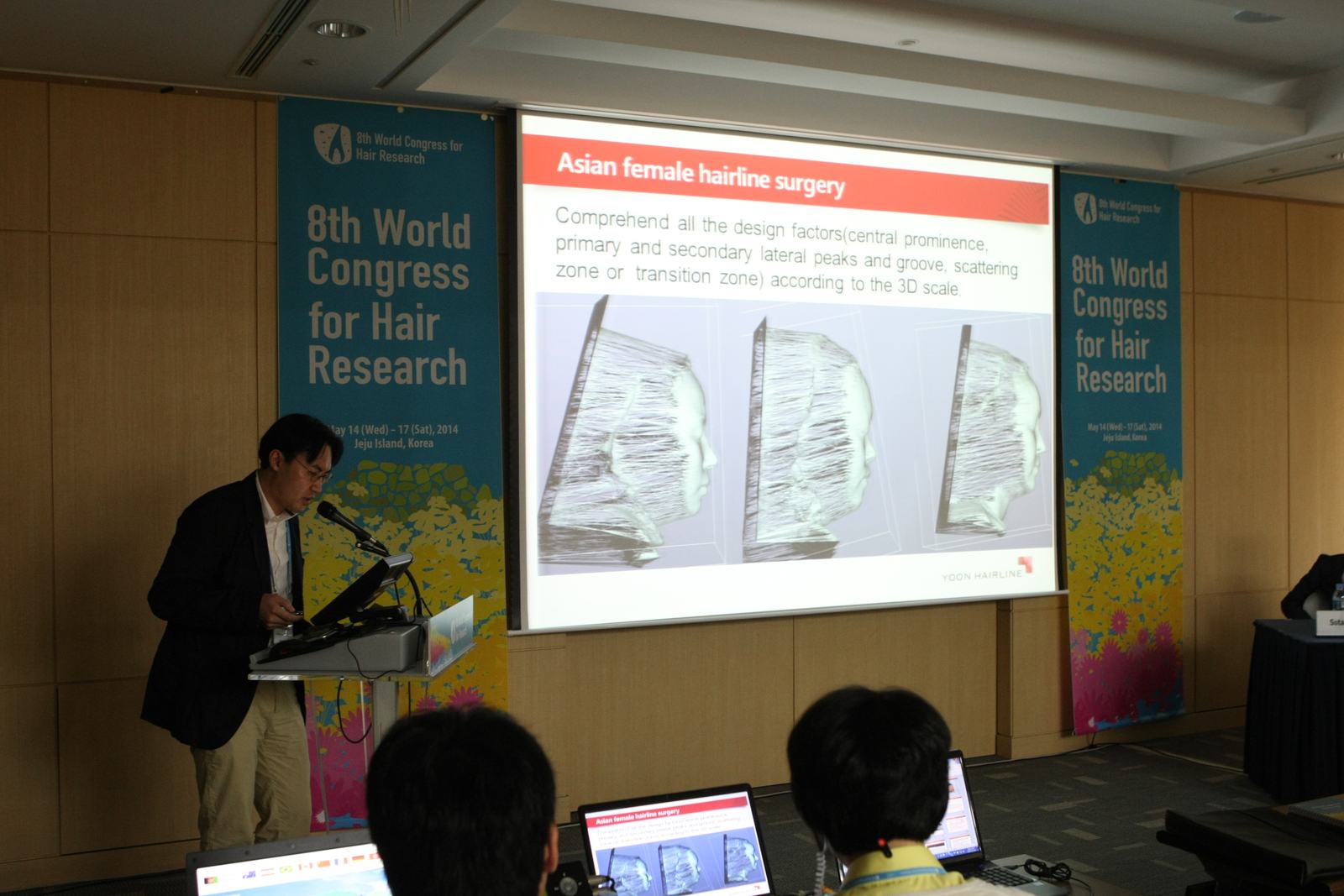
Dr. Sung Jae Yi presenting on Asian female hairline surgery at the 2014 World Congress for Hair Research
Studying the hairline one individual hair at a time.

01Academic Foundation

Presenting an FUE (Non-Strip) Approach to Asian Female Hairlines to the World

Asian female hairlines cannot be resolved by simply applying Western standards, because the hair shafts are thicker and the very front edge requires ultra-fine (vellus-like) hairs. Dr. Sung Jae Yi solved this challenge using an FUE (non-strip) technique and shared his findings openly with the international medical community rather than keeping them proprietary.

In 2011, Dr. Sung Jae Yi presented his FUE (non-strip) approach to Asian female hairline surgery and fine (vellus-like) hair transplantation at the International Society of Hair Restoration Surgery (ISHRS) Annual Scientific Meeting in Anchorage, USA—a technique capable of preserving and transplanting ultra-fine hairs previously considered too delicate to harvest and implant.

In 2014, he formalized this surgical method in a peer-reviewed publication: “Asian Female Hairline Surgery Using Follicular Unit Extraction” (Archives of Aesthetic Plastic Surgery)—one of the earliest peer-reviewed papers addressing FUE (non-strip) female hairline surgery in Asia.

A conference presentation undergoes immediate peer scrutiny; a published paper remains as a permanent scientific record. Dr. Sung Jae Yi has accomplished both.

Full text of "Asian Female Hairline Surgery Using Follicular Unit Extraction" published in Archives of Aesthetic Plastic Surgery

PAPER 1 · Arch Aesthetic Plast Surg 2014;20(1):52-60

What Is Actually Documented in the Paper

Unlike advertising, a peer-reviewed paper cannot hide behind vague numbers. This study analyzed 78 consecutive, unselected cases of FUE (non-strip) female hairline surgery performed between December 2012 and May 2013. Patients ranged in age from 18 to 57 (mean age 34.5) and were followed for 4 to 8 months.

78 casesConsecutive Series
Unselected Full Cohort
17 · 49 · 12Frontotemporal Recession · Full Hairline Lowering · Concurrent Forehead Scar Repair
0 casesLinear Donor Scars · Pluggy Grafts · Recipient-Site Cysts
2–3mmMicro-Strip Shave Width
Immediately Concealed by Surrounding Hair

In the paper, the transplanted volume for each case is recorded in individual hairs (“hairs”)—reporting actual hair counts rather than inflating numbers by quoting follicular unit counts. That is why Yoon Hairline Clinic still provides surgical estimates based on individual hairs during consultation today.

Correcting Common Misconceptions ①

Implantation Angle Matters More Than Curl Direction

It was once claimed that FUE (non-strip) surgery, which uses closely trimmed hairs, was unsuitable for female hairlines because curl direction could not be seen. Based on 78 consecutive cases, the paper demonstrated that curl direction has limited impact and that insertion angle and direction are the decisive factors.

Correcting Common Misconceptions ②

FUE (Non-Strip) Is Not “Scarless”

The paper honestly defines FUE (non-strip) not as scarless surgery, but as surgery that disperses tiny scars so they are barely visible. An unexaggerated definition serves as a stronger foundation for patient trust.

Asian Female Hairlines

Contouring the Upper Third of the Face

While Western women typically seek to lower the central forehead, Asian women often desire frontotemporal rounding for a softer forehead contour as well as temporal point restoration for a slimmer facial profile—approaching hairline surgery as reshaping the structural frame of the upper third of the face.

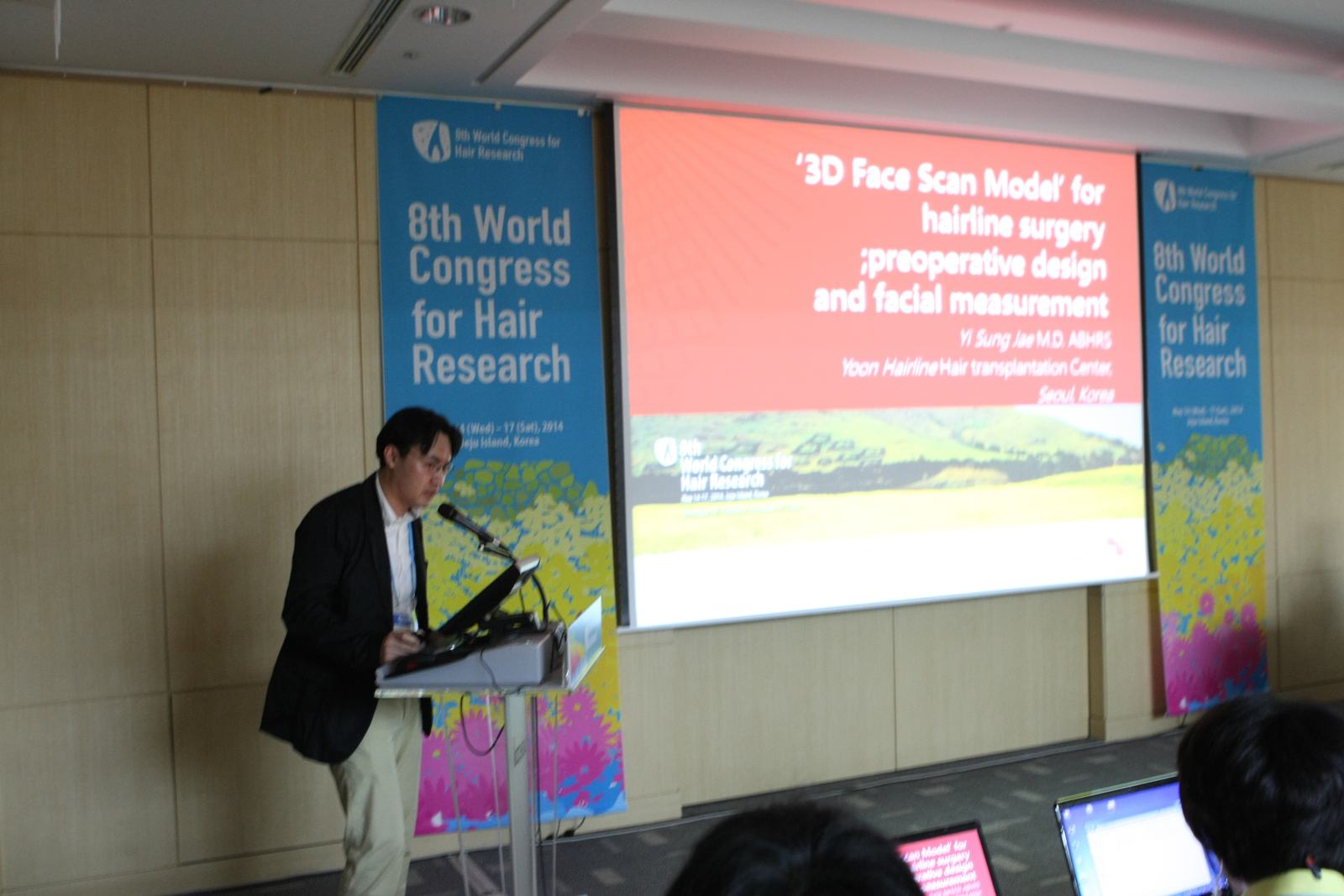
2014 World Congress for Hair Research — Presentation on hairline surgical design using a 3D face scan model
3D Face Scan Model Presentation
Dr. Sung Jae Yi presenting on Asian female hairline surgery at the 2014 World Congress for Hair Research
Asian female hairline surgery
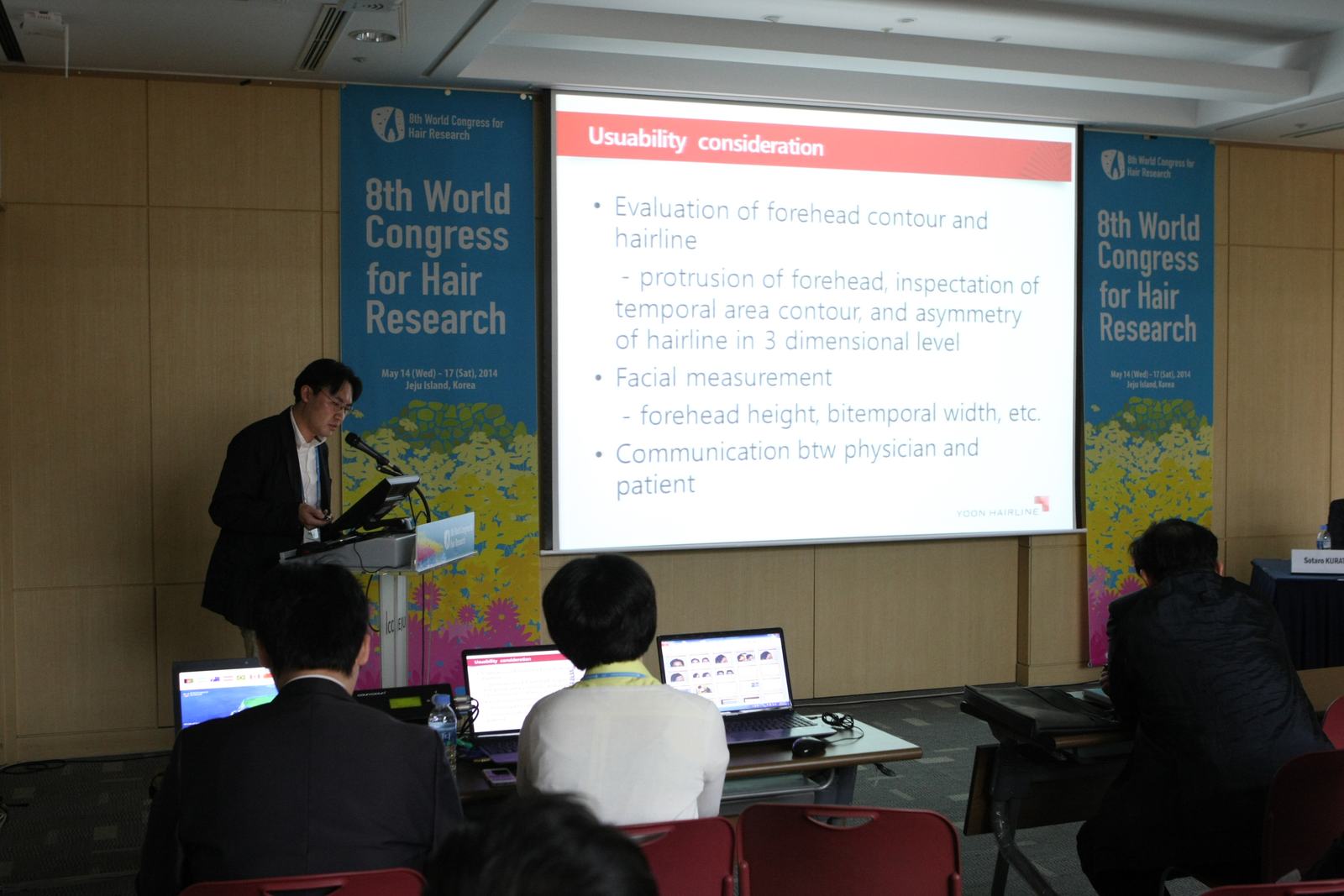
Presentation slide explaining three-dimensional evaluation parameters for forehead contours and temporal regions
Three-Dimensional Evaluation of Forehead Contours
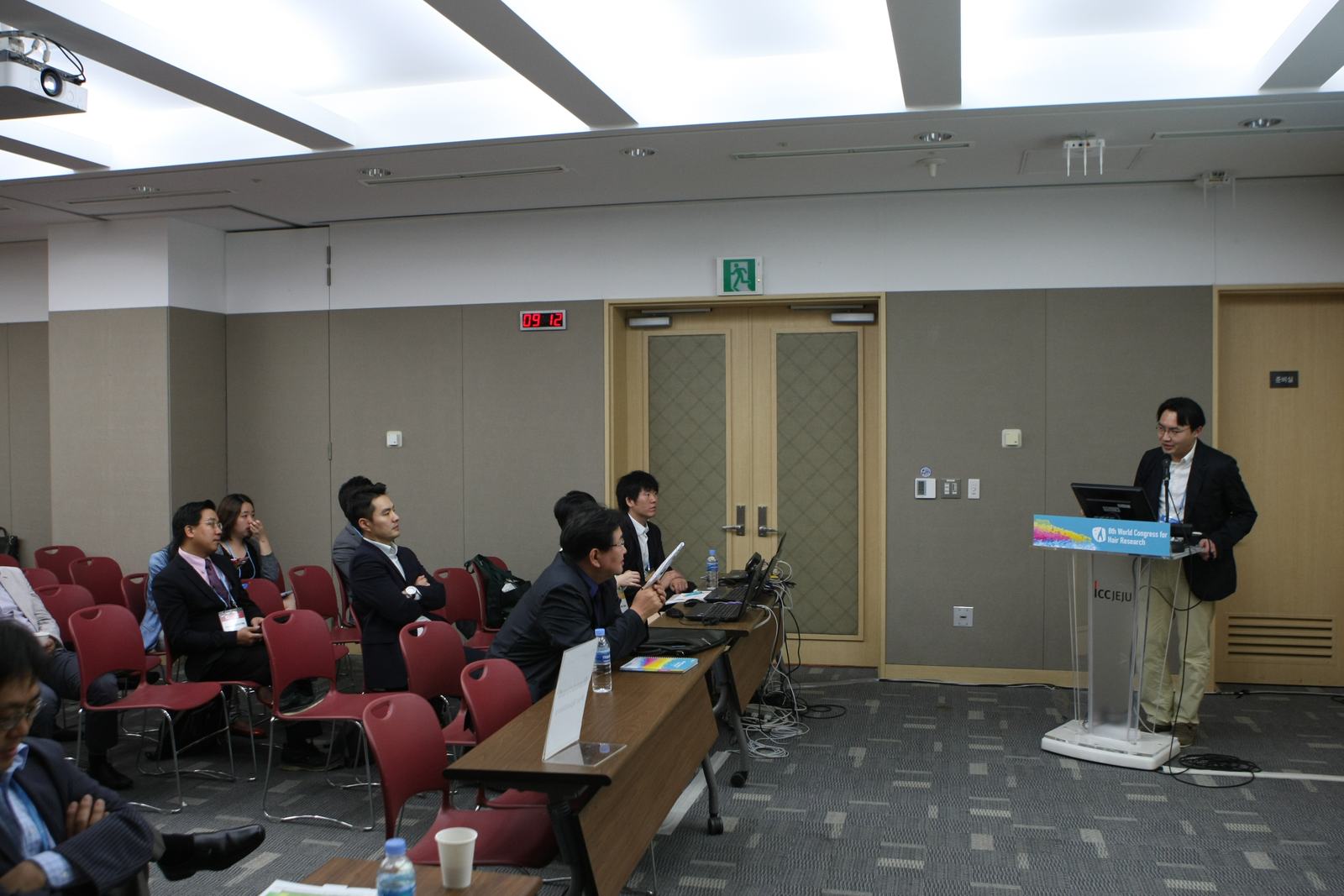
Overview of the auditorium and audience at the 2014 World Congress for Hair Research
WCHR 2014 · Jeju

PAPER 2 · Submitted to an International Peer-Reviewed Journal (Under Review)

209 Korean Donor Areas Counted Directly Under the Microscope

The “2 to 2.5 hairs per follicular unit” figure commonly used in hair transplant estimates is based on Western populations. From October 2023 to June 2026, Dr. Sung Jae Yi marked a 1 cm² area on the occipital scalp prior to excision across 209 consecutive Korean cases and counted every follicular unit under a microscope categorized by hair count. The results showed an average of approximately 68 follicular units and 110 hairs per 1 cm², yielding an average of approximately 1.6 hairs per follicular unit in Koreans—meaning Western conversion ratios overestimate actual hair counts by more than 40%.

1-Hair Follicular Units50%
2-Hair Follicular Units41%
3-Hair Follicular Units9%

Complete Follicular Count Study of 209 Korean Cases (Yi SJ, 2026 · Submitted to an international peer-reviewed journal, under review). Interim findings were reported at PRS KOREA 2023.

HIS20-Year History

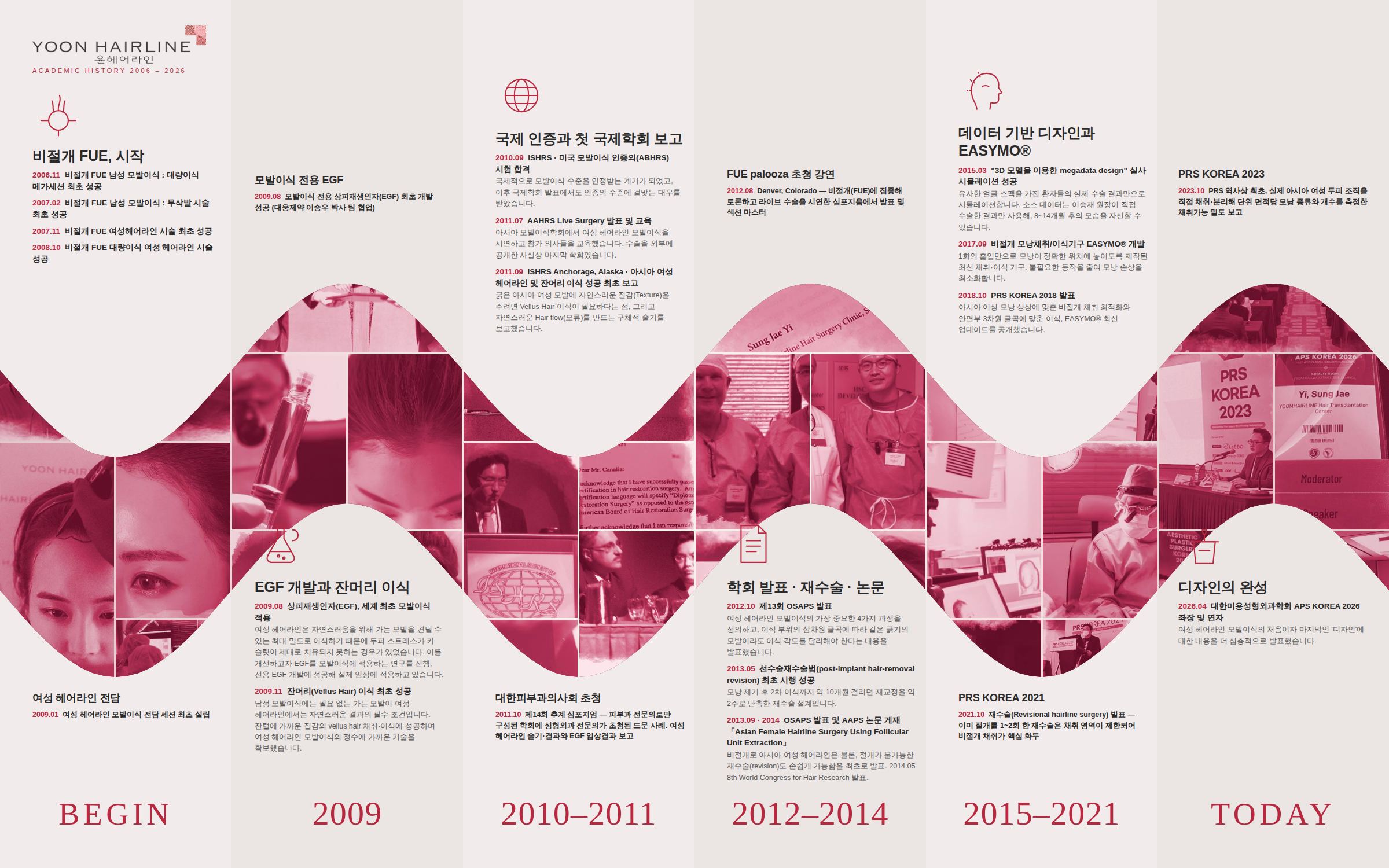
Year by Year from 2006 to Today
Select a period to view its clinical and academic milestones

From the year he began performing FUE (non-strip) surgery to developing proprietary materials, reporting to international congresses, publishing peer-reviewed research, and completing data-driven hairline design—organized chronologically.

Beginning FUE (Non-Strip) Practice

  • 2006.11Male FUE (Non-Strip) Hair Transplantation — Successful large-volume megasessions
  • 2007.02Male FUE (Non-Strip) Hair Transplantation — Successful unshaven FUE procedures
  • 2007.11Female Hairline FUE (Non-Strip) Surgery — Successful clinical implementation
  • 2008.10Large-Volume Female Hairline FUE (Non-Strip) Surgery — Successful megasession outcomes
  • 2009.01Established a dedicated clinical division for female hairline transplantation

Hair-Transplant-Specific EGF & Fine Hair Implantation

  • 2009.08Developed Epidermal Growth Factor (EGF) solution for hair transplantation — Co-developed with Dr. Seung-Woo Lee’s team at Daewoong Pharmaceutical to reduce scalp stress caused by dense female hairline packing
  • 2009.11Successful Fine (Vellus-Like) Hair Transplantation — Harvested and implanted ultra-fine, downy hairs essential for a natural-looking female hairline

International Board Certification & Global Presentations

  • 2010.09Passed the American Board of Hair Restoration Surgery (ABHRS) examination — Earning internationally recognized board certification in hair restoration
  • 2011.07AAHRS Live Surgery Demonstration & Training — Demonstrated female hairline transplantation and trained attending surgeons at the Asian Association of Hair Restoration Surgeons
  • 2011.09ISHRS Anchorage (Anchorage, Alaska) — Presented on Asian female hairline surgery and fine (vellus-like) hair transplantation, detailing techniques to create natural texture and hair direction with thicker Asian hair shafts
  • 2011.10Invited Speaker at the 14th Fall Symposium of the Korean Dermatologists Association — Presented female hairline surgical techniques, outcomes, and EGF clinical results

Academic Presentations · Revision Surgery · Peer-Reviewed Paper

  • 2012.08Invited Speaker at FUE Palooza (Denver, Colorado) — Presented and served as a section master at an intensive live-surgery symposium dedicated to FUE (non-strip) techniques
  • 2012.10Presented at the 13th OSAPS Congress — Detailed four core stages of female hairline transplantation and why implantation angles must vary according to three-dimensional scalp curvature even for hairs of identical caliber
  • 2013.05Implemented Staged Post-Implant Hair-Removal Revision — A corrective protocol removing improperly placed hairs first before redesigning and re-implanting the hairline
  • 2013.09 · 2014Presented at OSAPS and published the peer-reviewed paper “Asian Female Hairline Surgery Using Follicular Unit Extraction” in Archives of Aesthetic Plastic Surgery (AAPS)
  • 2014.05Presented at the 8th World Congress for Hair Research (WCHR, Jeju)

Data-Driven Design & EASYMO®

  • 2015.03Megadata Design Simulation Using 3D Models — Previewing expected post-operative appearance using actual surgical outcomes from patients with comparable facial contours
  • 2017.09Developed EASYMO® FUE Extraction & Implantation Device — Engineered to place follicles into exact positions with a single suction action
  • 2018.10Presented at PRS KOREA 2018 — Addressed FUE (non-strip) extraction optimization tailored to Asian female follicle characteristics and implantation matched to three-dimensional facial contours
  • 2021.10Presented on Revisional Hairline Surgery at PRS KOREA 2021 — Highlighted why FUE (non-strip) harvesting is critical in revision cases where donor availability is restricted after 1 to 2 prior strip (FUT) procedures

Refining Three-Dimensional Hairline Design

  • 2023.10Session Chair at PRS KOREA 2023 — Reported harvestable donor density measured by directly excising and dissecting Asian female scalp tissue to count follicular unit types and hair numbers per unit area
  • 2026.04Session Chair & Invited Speaker at APS KOREA 2026 — Delivered an in-depth lecture on hairline design as both the starting point and foundation of female hairline transplantation
  • 2026Complete Follicular Count Study of 209 Korean Donor Areas — Submitted to an international peer-reviewed journal (currently under review)
Infographic of Yoon Hairline Clinic's 2006–2026 academic timeline — Beginning FUE (non-strip), EGF development and fine hair implantation, international certification and conference reports, academic presentations and peer-reviewed papers, data-driven design and EASYMO, and refining three-dimensional hairline design
YOON HAIRLINE ACADEMIC HISTORY 2006 – 2026
Dr. Sung Jae Yi at the launch presentation of the hair-transplant-specific EGF formulation
EGF · Developed in 2009 · Reported in 2011

02Proprietary Innovations

When the right materials and instruments do not exist, he builds them to protect surgical outcomes.

Superior surgical results are not achieved by hand skill alone—sometimes the scalp environment itself or the surgical instrument itself must evolve. Rather than relying solely on existing tools, Dr. Sung Jae Yi developed what was needed himself.

World’s First Epidermal Growth Factor (EGF) Solution for Hair Transplantation Developed in 2009 · Reported in 2011

In scalp tissue hardened by scarring, follicle survival rates drop significantly. To overcome this challenge, Dr. Sung Jae Yi collaborated with Dr. Seung-Woo Lee’s research team at Daewoong Pharmaceutical to become the first in the world to develop an Epidermal Growth Factor (EGF) preservation solution dedicated to hair transplantation—accelerating recovery of compromised scalp tissue to improve graft survival conditions even in demanding revision cases.

EASYMO® Hair Transplant Instrument 2017

To elevate precision and consistency in extraction and implantation, Dr. Sung Jae Yi developed the EASYMO® FUE (non-strip) extraction and implantation device. By automating follicle orientation so each follicle seats accurately with a single suction action rather than manual individual loading, EASYMO® reduces follicular trauma and enhances implantation stability.

When a surgeon personally develops regenerative solutions and surgical instruments, it reflects a commitment to taking full responsibility for the final outcome.

Where Is EGF Used?

EGF is a growth factor that promotes the regeneration of damaged skin and tissue. At Yoon Hairline Clinic, it is used to support the graft survival environment where transplanted follicles take root and to aid healing at FUE (non-strip) extraction sites—making it especially valuable for revision surgeries involving scalp tissue hardened and scarred from prior procedures.

Developing a clinical material firsthand also means experiencing why it was needed directly at the operating table.

What Did EASYMO® Change?

During FUE (non-strip) transplantation, follicles can be damaged if they dry out or are compressed while outside the body. EASYMO® was designed to minimize manual loading steps, reducing both the number of times follicles are handled and the time spent out of the body. Its updated version was presented at the 2018 Congress of the Korean Society of Plastic and Reconstructive Surgeons.

There is only one reason to refine an instrument: to deliver more consistent outcomes with the same surgical hands.

Dr. Sung Jae Yi inspecting the EGF preservation solution while wearing surgical loupes
EGF Preservation Solution
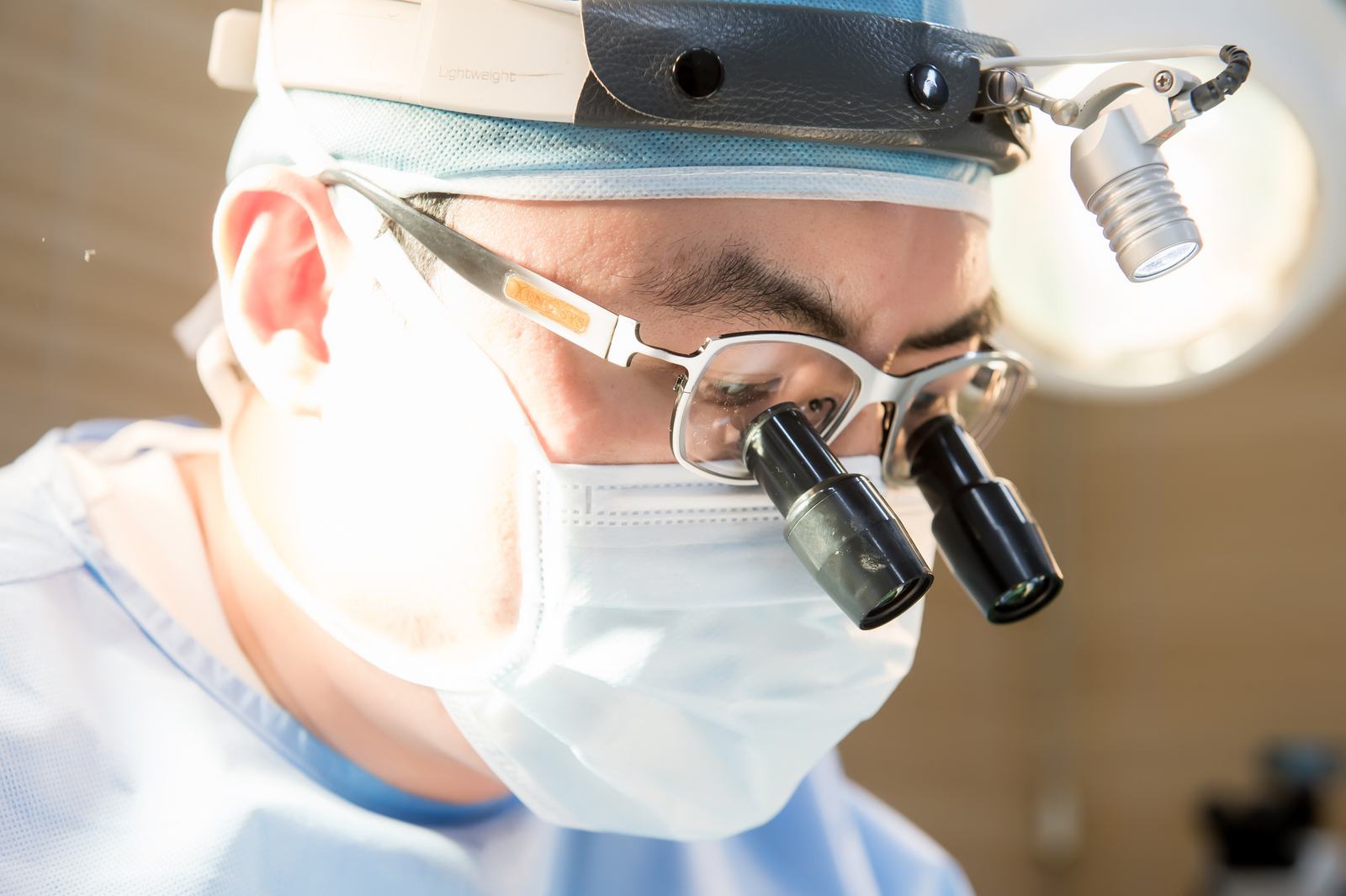
Chief Director focused on follicle implantation while wearing surgical loupes
Under Surgical Loupes
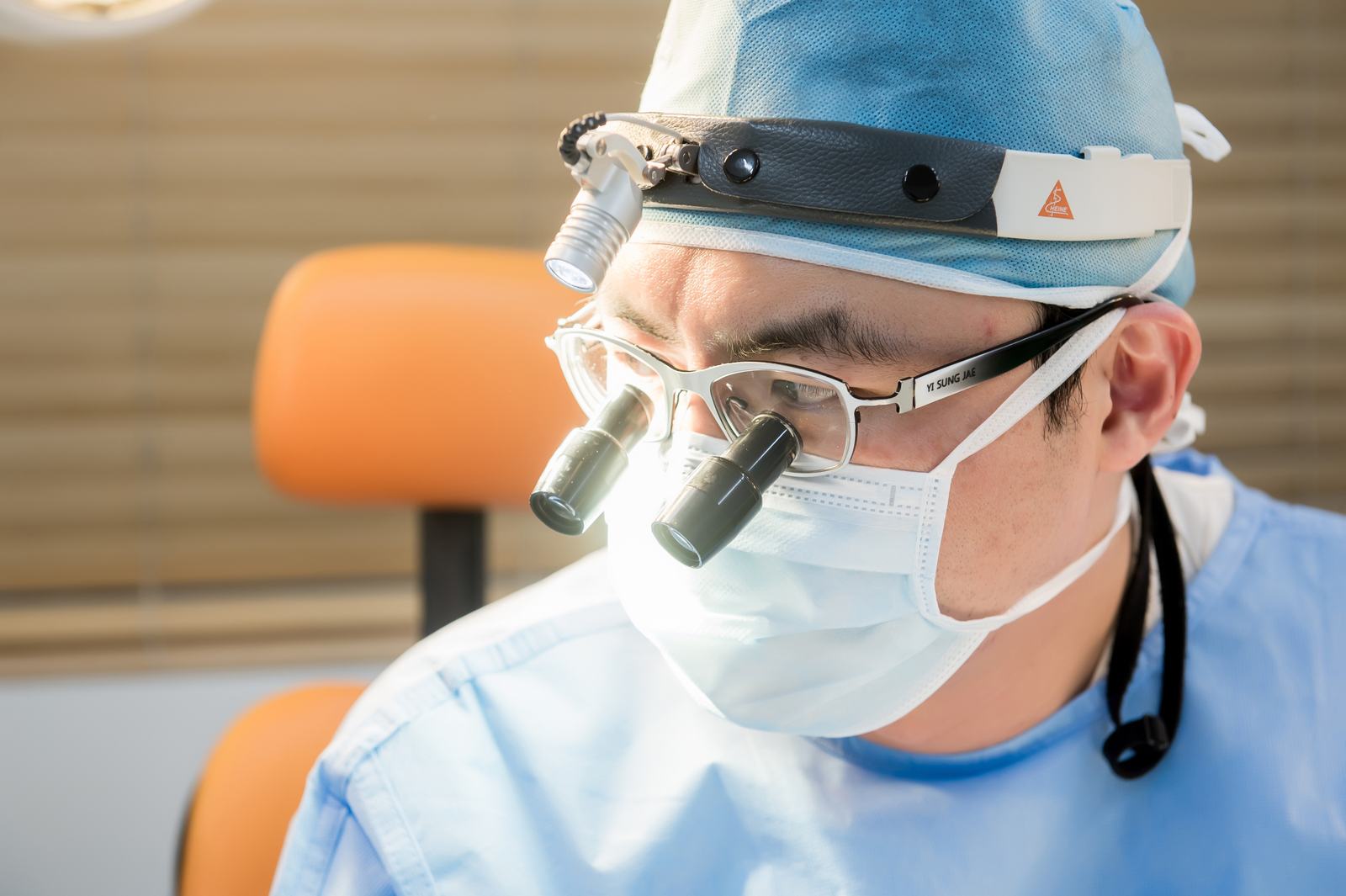
Chief Director Sung Jae Yi, M.D., personally performing surgery while wearing surgical loupes
Performed Personally by the Chief Director

03Session Chair & Invited Speaker

The most discerning audience is fellow board-certified specialists—and before them, Dr. Sung Jae Yi has stood as session chair and invited speaker.

Anyone can write advertisements aimed at patients. However, the role a surgeon holds at academic congresses attended exclusively by board-certified plastic surgeons is an undeniable reflection of peer-recognized skill.

PRS KOREA and APS KOREA are academic forums where board-certified plastic surgeons gather to scrutinize and learn from one another’s surgical outcomes. At these congresses, Dr. Sung Jae Yi stood not in the audience, but as Session Chair and Invited Speaker—serving in both roles for the hair sessions at PRS KOREA 2023 and APS KOREA 2026.

A session chair is not merely a moderator—the role entails leading the session, evaluating colleagues’ presentations, and synthesizing clinical discussions, a responsibility peers entrust only to surgeons with a long, verified track record.

The toughest audience is peers walking the same surgical path—and before that audience, Dr. Sung Jae Yi has stood on the podium rather than in the seats.

Domestic & International Conference Presentations · Session Chair Record
YearSociety / CongressRole
2011ISHRS · Anchorage, USAInvited Speaker
2011AAHRS · Live SurgeryLive Demonstration · Surgical Training
2011Korean Dermatologists Association Fall SymposiumInvited Speaker
2012FUE Palooza · Denver, USAInvited Speaker · Section Master
2012 · 2013OSAPSInvited Speaker
20148th World Congress for Hair ResearchInvited Speaker
2016Korean Society for Aesthetic Plastic SurgeryInvited Speaker
2018 · 2021Korean Society of Plastic and Reconstructive Surgeons (PRS KOREA)Invited Speaker
2023Korean Society of Plastic and Reconstructive Surgeons (PRS KOREA)Session Chair · Invited Speaker
2026Korean Society for Aesthetic Plastic Surgery (APS KOREA)Session Chair · Invited Speaker
Dr. Sung Jae Yi presenting at the 2016 Congress of the Korean Society for Aesthetic Plastic Surgery
Aesthetic Plastic Surgery 2016
Dr. Sung Jae Yi presenting from the podium at an aesthetic plastic surgery congress
APS Podium
Podium at the 2016 Congress of the Korean Society for Aesthetic Plastic Surgery
APS 2016
Dr. Sung Jae Yi presenting on Asian female hairline surgery at the 2014 World Congress for Hair Research
WCHR 2014
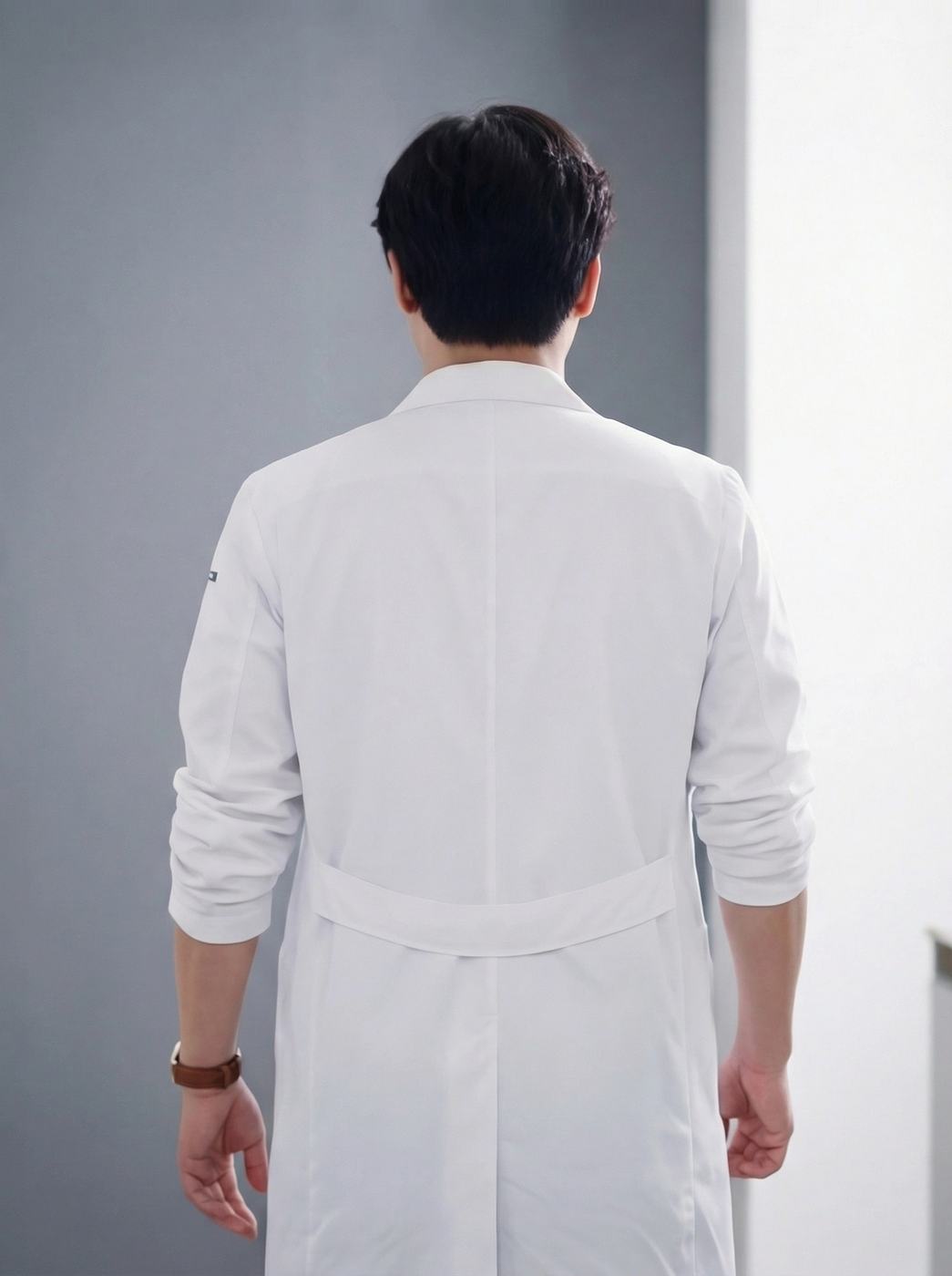
Rear view of Chief Director Sung Jae Yi, M.D., walking toward the operating room
One Surgeon from Start to Finish

04Start-to-Finish Care

From consultation to the very last hair, performed personally by a board-certified plastic surgeon with 22 years of experience

A hair transplant consists of multiple stages, and when stages are divided, surgical hands often change too. If the person who consults, the person who designs, the person who extracts, and the person who implants are all different, the initial clinical judgment is never carried through to the end.

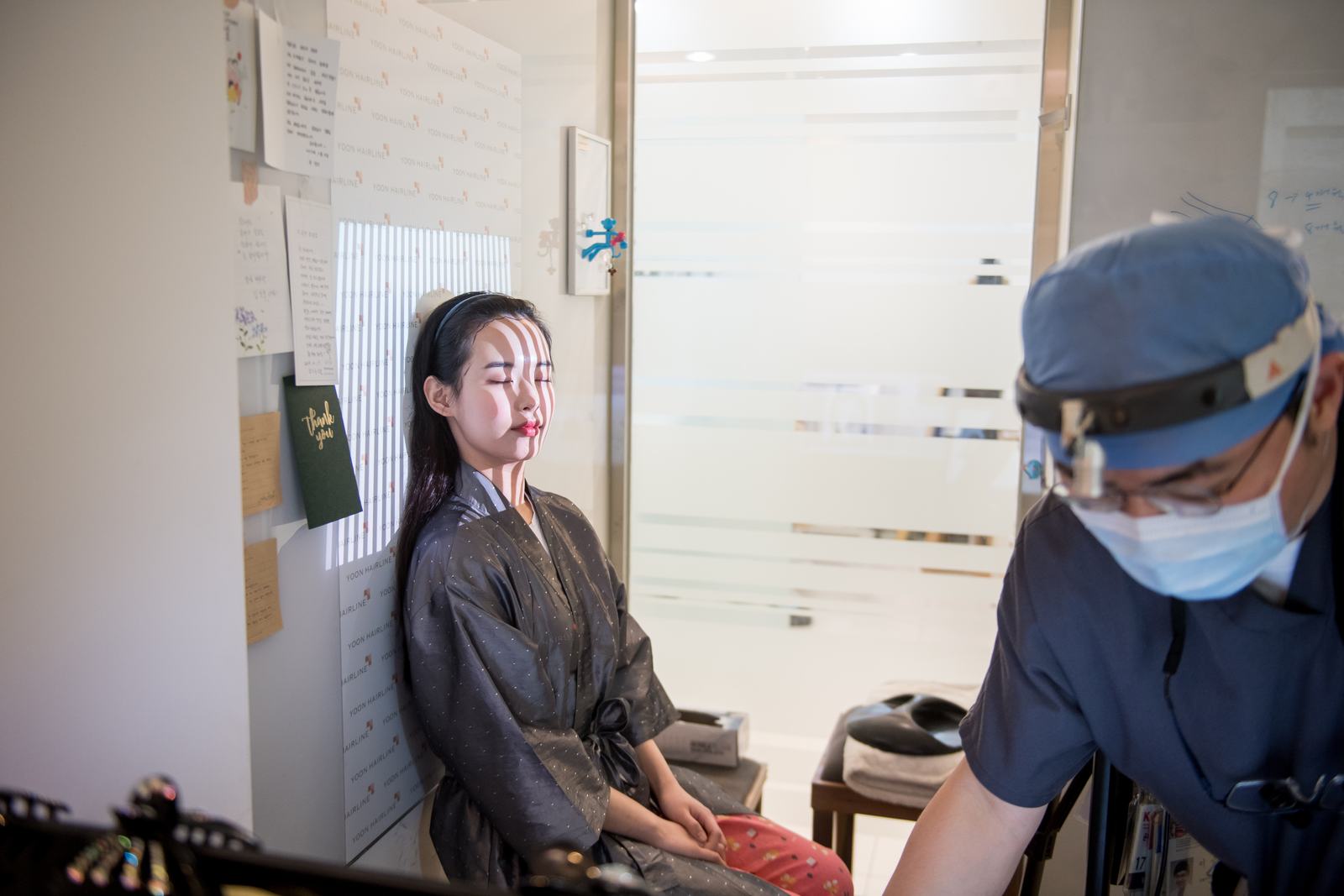
At Yoon Hairline Clinic, one surgeon handles every stage from start to finish. The Chief Director—a board-certified plastic surgeon with 22 years of experience—personally evaluates your scalp, designs the hairline using 3D data, maps the three-dimensional design onto the forehead, extracts via strip (FUT) or FUE (non-strip), creates recipient-site slits, implants the follicles, and follows your progress through the one-year mark.

Two factors determine the outcome of a hairline transplant: how many truly fine hairs are secured, and where those fine hairs are placed. Fine hairs cannot be sorted out after extraction—the surgeon who knows which donor zones yield which hair calibers must select them at the moment of extraction. Likewise, deciding where to place those hairs and where to leave natural spacing is only preserved when the surgeon who designed the hairline performs the implantation. Securing the right hairs is a matter of donor selection; placing them is a matter of surgical skill.

  1. DiagnosisScalp · Hair Shaft Caliber · Donor Density
  2. 3D Design3D Scanning · Megadata Matching
  3. MappingTransferring the 3D Design onto the Forehead
  4. ExtractionStrip (FUT) or FUE (Non-Strip) · Fine Hair Selection
  5. SlitsIncision Angle Sets Implantation Angle
  6. ImplantationPrecision Down to Every Single Follicle
  7. Follow-UpSame Surgeon Through One Year Post-Op
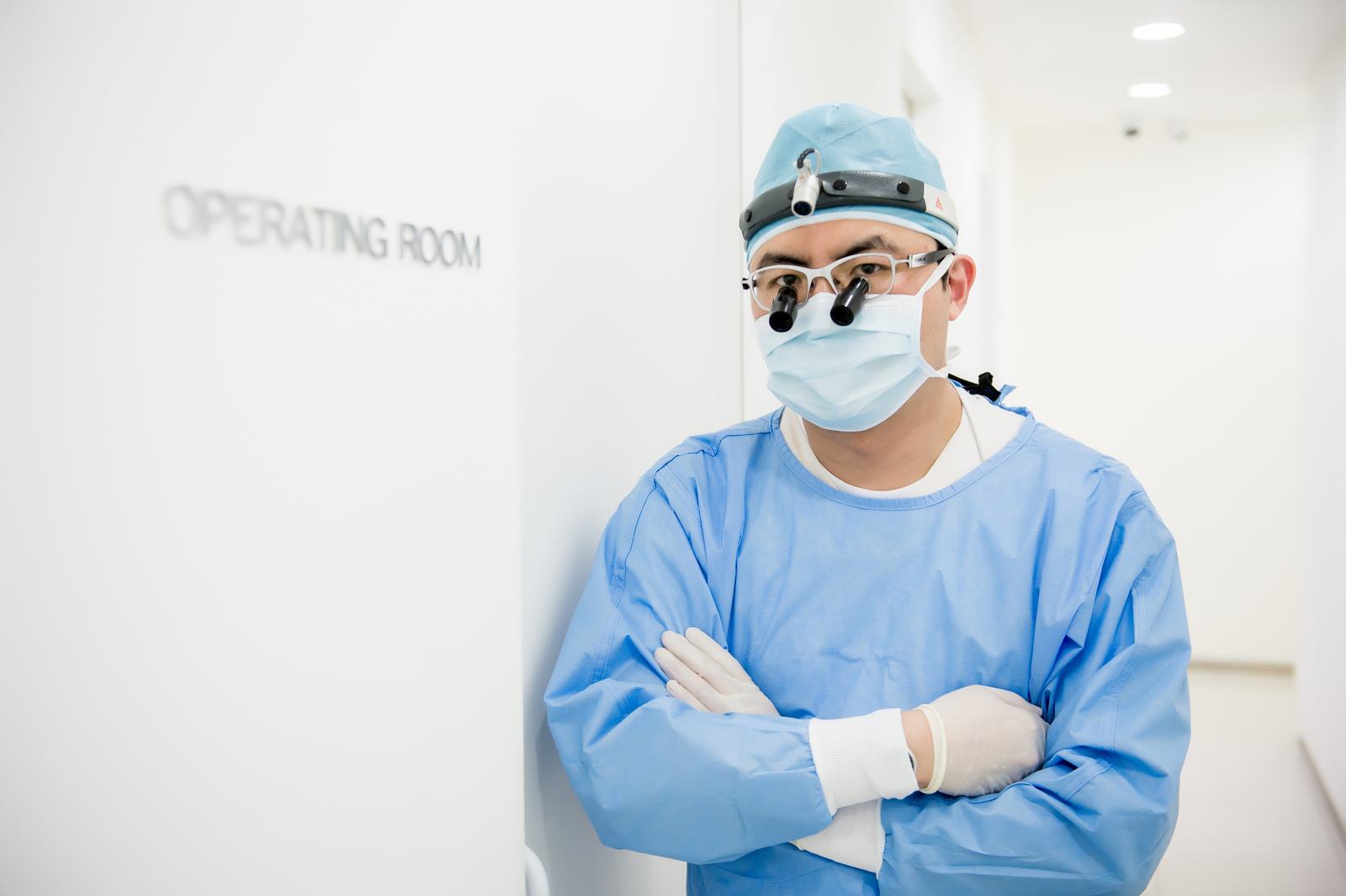
Chief Director Sung Jae Yi, M.D., standing outside the operating room
OPERATING ROOM
Performing follicle extraction in the operating room alongside the surgical team
Surgeon-Performed · Supported by Surgical Team
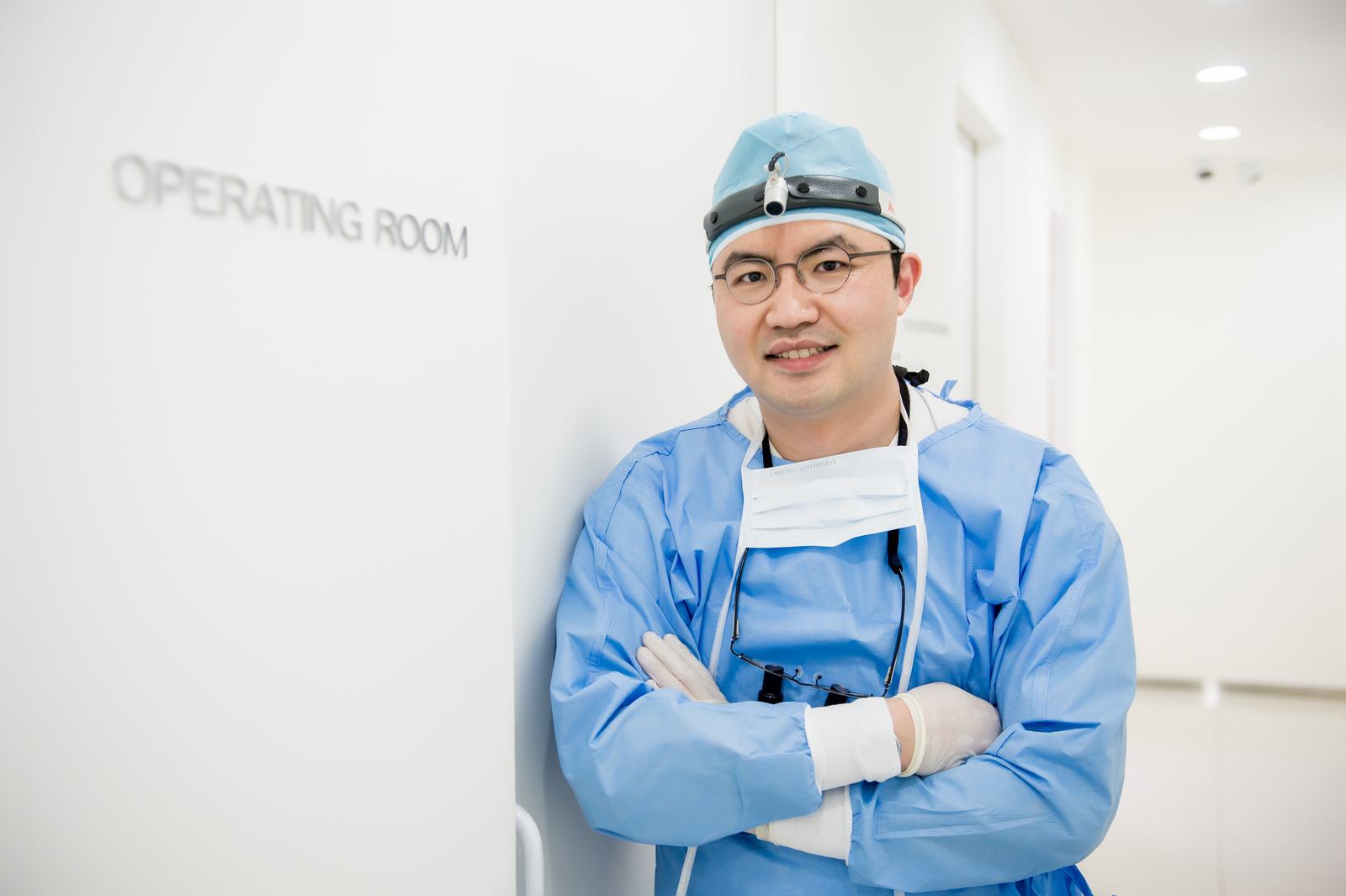
Chief Director Sung Jae Yi, M.D., in surgical scrubs with arms folded
22-Year Board-Certified Plastic Surgeon

05Complex Revision Surgery

Revision surgery is far more demanding than a primary transplant—which is why the sequence itself is designed differently

A revision patient’s scalp carries scarring from prior surgery, a reduced donor supply, and improperly implanted hairs occupying key zones. Even when using FUE (non-strip), the surgical conditions are completely different.

93~95%

Intact follicle extraction rate via FUE (non-strip) from an unscarred occipital donor area

Less than 50%

Intact extraction rate when removing follicles from previously transplanted or scarred tissue

Based on the Chief Director’s clinical observations. Scar tissue binds tightly around the follicles, making intact extraction difficult even with the exact same technique.

Staged Post-Implant Hair-Removal Revision — Remove First, Let Heal, Then Re-Implant

  1. Extraction (Removal)

    Unnaturally placed hairs along the front (pluggy grafts or hairs angled in the wrong direction) are removed first using FUE (non-strip). Rather than discarding the extracted follicles, viable ones can be re-implanted in less conspicuous rear zones—a follicle-recycling revision approach performed across hundreds of cases.

  2. Approximately 4 Weeks of Recovery

    The extraction sites are given time to heal. New follicles are never implanted into the exact same sites on the day of removal, because the tissue is not yet ready to support new grafts.

  3. First-Stage Re-Implantation

    The hairline is redesigned in 3D, and a soft transition zone along the front edge is rebuilt using fine (vellus-like) hairs. On scarred scalp tissue, EGF is applied to support the graft survival environment.

  4. Second Stage After 4–6+ Months

    Once the first-stage grafts have settled, density and hairline borders are refined—and split into a third stage if needed. Preserving the donor area through staged sessions leaves far better results than exhausting it in a single attempt.

Revision After Prior Strip (FUT) Surgery

Patients who have already undergone one or two strip (FUT) procedures have a limited donor zone remaining for further strip harvesting. In these cases, selectively extracting remaining follicles one by one via FUE (non-strip) is essential—a revision strategy Dr. Sung Jae Yi presented at PRS KOREA 2021.

Hairlines Accompanied by Forehead Surgery Scars

Hairlines scarred from forehead lifts or forehead reduction surgery are also corrected. Of the 78 consecutive cases in the 2014 paper, 12 involved such surgical scars, where custom-made ultra-fine slit blades were used to penetrate fibrotic scar tissue.

Revision surgery typically costs several times more than a primary procedure and takes nearly twice as long—and few surgeons can perform it properly. The best revision surgery is a primary surgery done right the first time so revision is never needed.

06Male Hair Transplantation

Male Hairlines Designed to the Same Standard as Female Hairlines — Undetectable Even Up Close
Tap a point to see what is evaluated in a male hairline

When male hair transplantation is approached simply as filling in empty areas, the outcome is predictable: density increases, yet the hairline border looks harsh as if cut with a blade, and the temporal corners appear unnatural. Yoon Hairline Clinic designs male hairlines with the exact same level of detail as female hairlines—held to a standard that looks natural even under a close-up camera lens.

Front-view virtual model illustrating five key zones of a male hairline — central forehead, transition zone, frontotemporal angle, temporal corner, and hair angle and direction
Virtual Model · Not an Actual Patient · Dotted Outline = Hairline Structure

POINT 1

Central Forehead

Lowering the central forehead too far in men looks unnatural for their age and facial proportions. Facial length and three-dimensional forehead curvature are measured in 3D to determine the appropriate height for each individual.

Transition Zone

A Gradual Feathering Zone, Not a Hard Border

A hairline is a three-dimensional structure, not a flat two-dimensional outline. The width of the transition zone—where density gradually feathers—is tailored by region: around 7 mm in the center and over 10 mm at the temporal corners, where the eye naturally lingers.

Graft Selection

Fine Hairs Matter for Men Too

Because male hair shafts are thick, placing coarse hairs along the front edge makes the border immediately obvious. Fine hairs are selectively harvested during extraction and placed along the front edge for men as well. Since half of Korean follicular units are single-hair units, the donor supply is there—what matters is having a surgeon who selects them.

Implantation Angle

Flatter Than Textbook Angles

Textbooks state an implantation angle of 45–60° for the anterior hairline, whereas Dr. Sung Jae Yi places grafts at an even flatter angle—the exact degree is kept proprietary. Hairs must lie close to the scalp rather than standing upright so the border looks natural even with short male hairstyles.

Reviewing the three-dimensional hairline design for a male patient
Male Hairline Evaluation
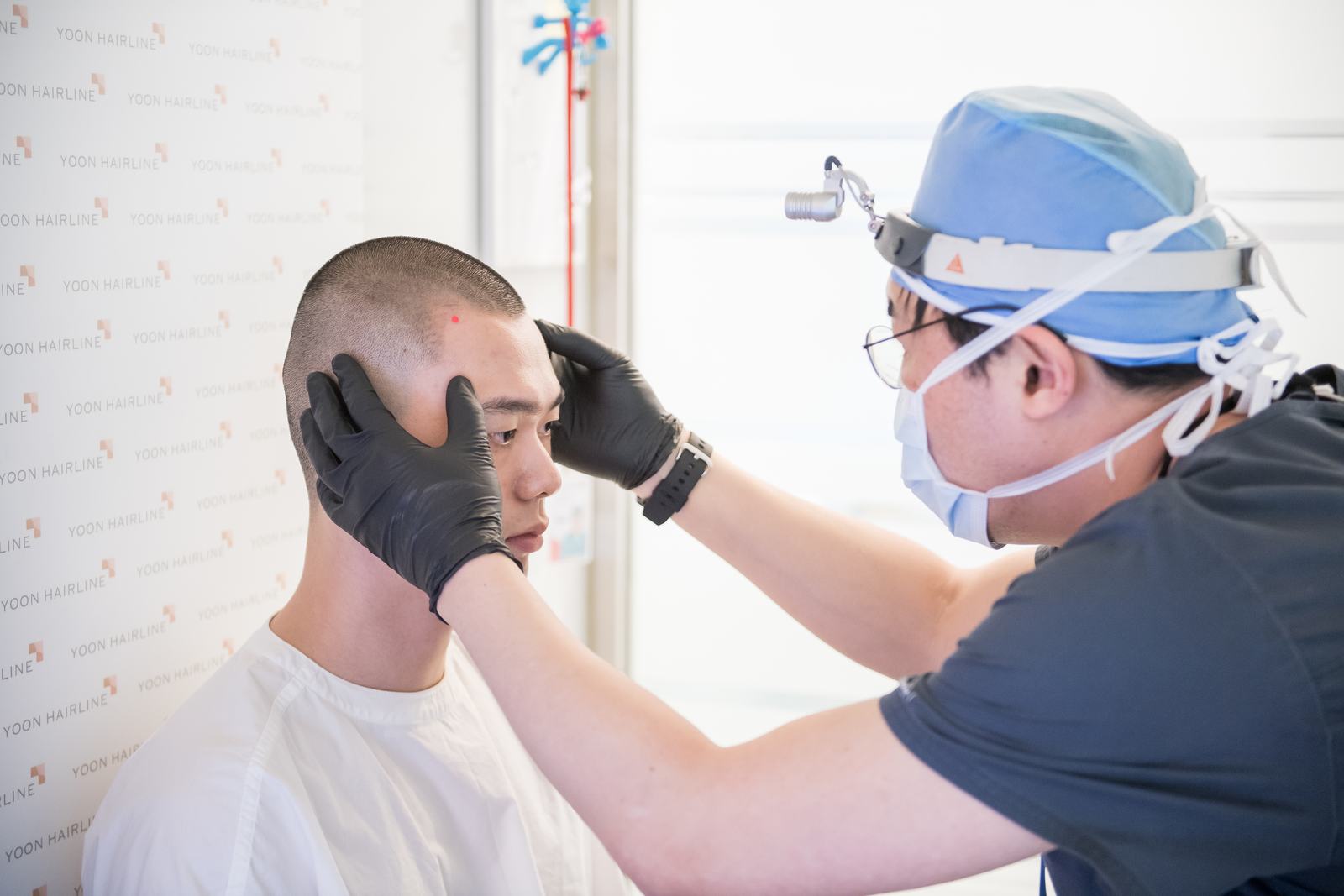
Performing a 3D facial scan of a male patient
3D Scanning for Male Patients
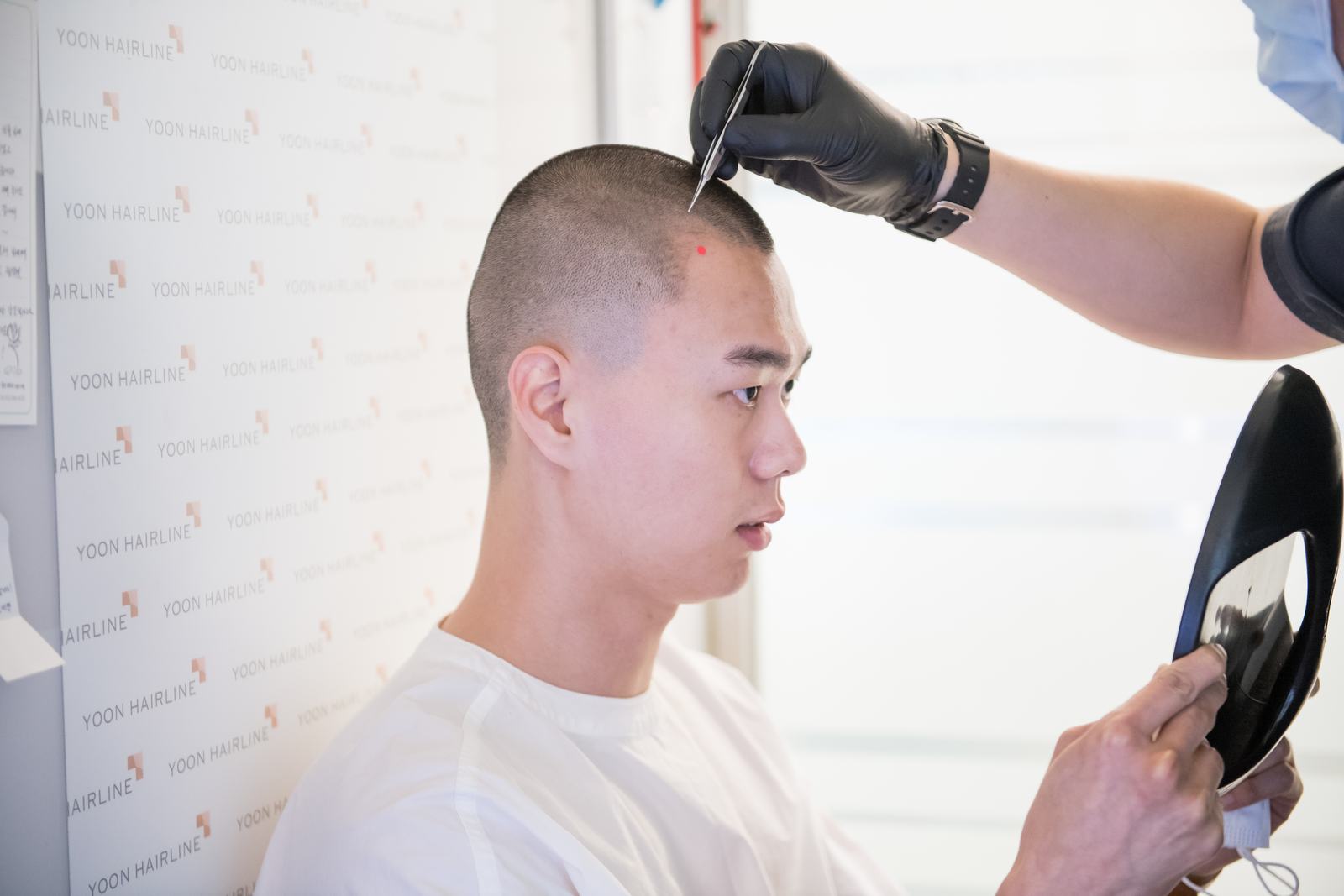
Mapping the three-dimensional hairline design onto a male patient's forehead
Mapping the Design onto the Forehead
Male patient preparing for the procedure on the operating table
Surgical Preparation

When male pattern hair loss has progressed to a moderate or advanced stage requiring a large volume of hair, strip (FUT) surgery is recommended to preserve future donor resources. The reason a surgeon who began male FUE (non-strip) megasessions in 2006 and unshaven male FUE in 2007 recommends strip (FUT) in such cases is that it preserves more total hair for the patient over a lifetime.

07Strip (FUT) & FUE (Non-Strip)

Over 20 Years of Personally Performing Both Strip (FUT) and FUE (Non-Strip)

A clinic that performs only one method inevitably recommends that method to every patient. Because the Chief Director at Yoon Hairline Clinic personally performs both strip (FUT) and FUE (non-strip), the choice is guided not by trends, but by what preserves the most hair for each patient.

Strip · FUT

Moderate-to-Advanced Megasessions · Female Crown Thinning

Reliably harvests a high volume of hair in a single session from the occipital safe donor zone while preserving future donor reserves. For moderate-to-advanced hair loss, recommending FUE (non-strip) alone can work against the patient’s long-term interests, so strip (FUT) is recommended even when it takes extra explanation. For female crown procedures, strip (FUT) and FUE (non-strip) are never mixed within the same session.

FUE · Non-Strip

Female Hairlines · Revision Surgery · Scarred Tissue

FUE (non-strip) offers two distinct advantages: procedural adaptability to harvest remaining follicles one by one even when further strip (FUT) excision is no longer possible, and high selectivity to cherry-pick exclusively 2-hair follicular units to cover scars or fine single-hair units for the front hairline edge.

For a detailed comparison of both methods and when each is appropriate, see FUE (Non-Strip) vs. Strip (FUT) Hair Transplantation.

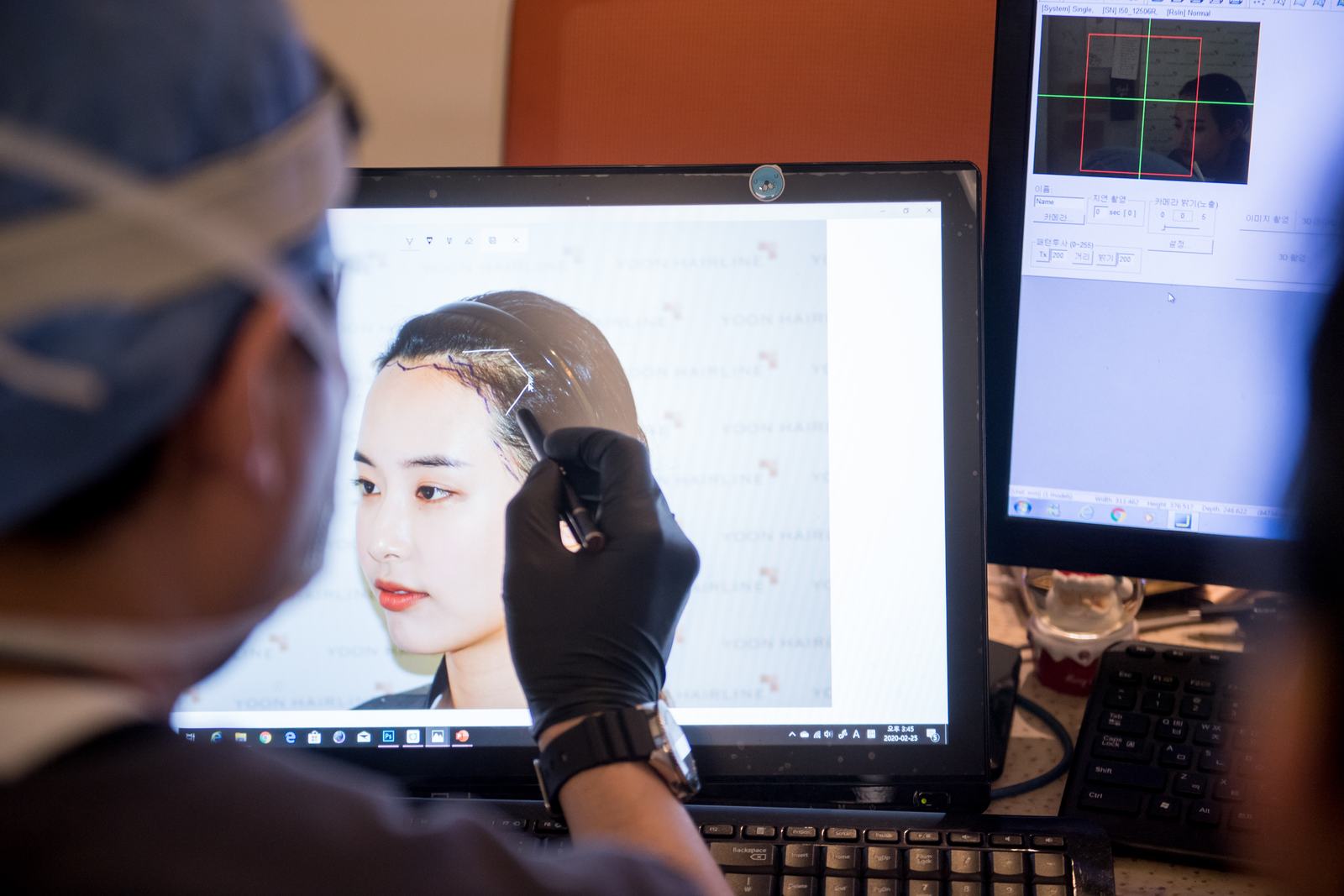
Chief Director designing a three-dimensional hairline on screen using 3D scan data and megadata
Design Built on 3D Data

08Data-Driven Design

Never Improvised — Planned with 3D Scanning and Data from Over 7,000 Cases

Marking a hairline with a surgical pen looks similar at every clinic; the difference lies in the clinical data behind that pen.

Since 2015, Yoon Hairline Clinic has planned procedures using 3D-model megadata design. A 3D scanner captures the three-dimensional contours of the forehead and temples, and actual surgical outcomes from patients with matching facial contours are retrieved from over 7,000 data-logged cases performed by the surgical team and mapped onto the patient’s face—previewing expected growth at 10 to 12 months and calculating the exact recipient area and hair count needed.

Hair counts are calculated using direct Korean clinical measurements—applying the measured Korean average of approximately 1.6 hairs per follicular unit from 209 cases rather than multiplying follicular unit counts by the Western 2–2.5 benchmark, so the quoted hair count matches the actual number of hairs implanted.

Presentation slide of the 3D face scan model presented at a 2014 academic congressChief Director personally operating the 3D scanning system

View the complete step-by-step journey from consultation to one-year follow-up with photos and videos in The Hairline Restoration Process.

CHKQuestions When Choosing a Clinic

Ask These Seven Questions at Any Clinic You Visit
Tap each item to check off what you have verified

Advertising slogans all sound alike; what separates clinics is whether they can answer the questions below with verifiable records. Yoon Hairline Clinic’s answers are listed alongside each question.

0 / 7 Verified

For a fuller guide on evaluating clinics, see How to Choose a Hair Transplant Clinic.

Chief Director Sung Jae Yi, M.D., Board-Certified Plastic Surgeon, Yoon Hairline Clinic

DIRECTOR

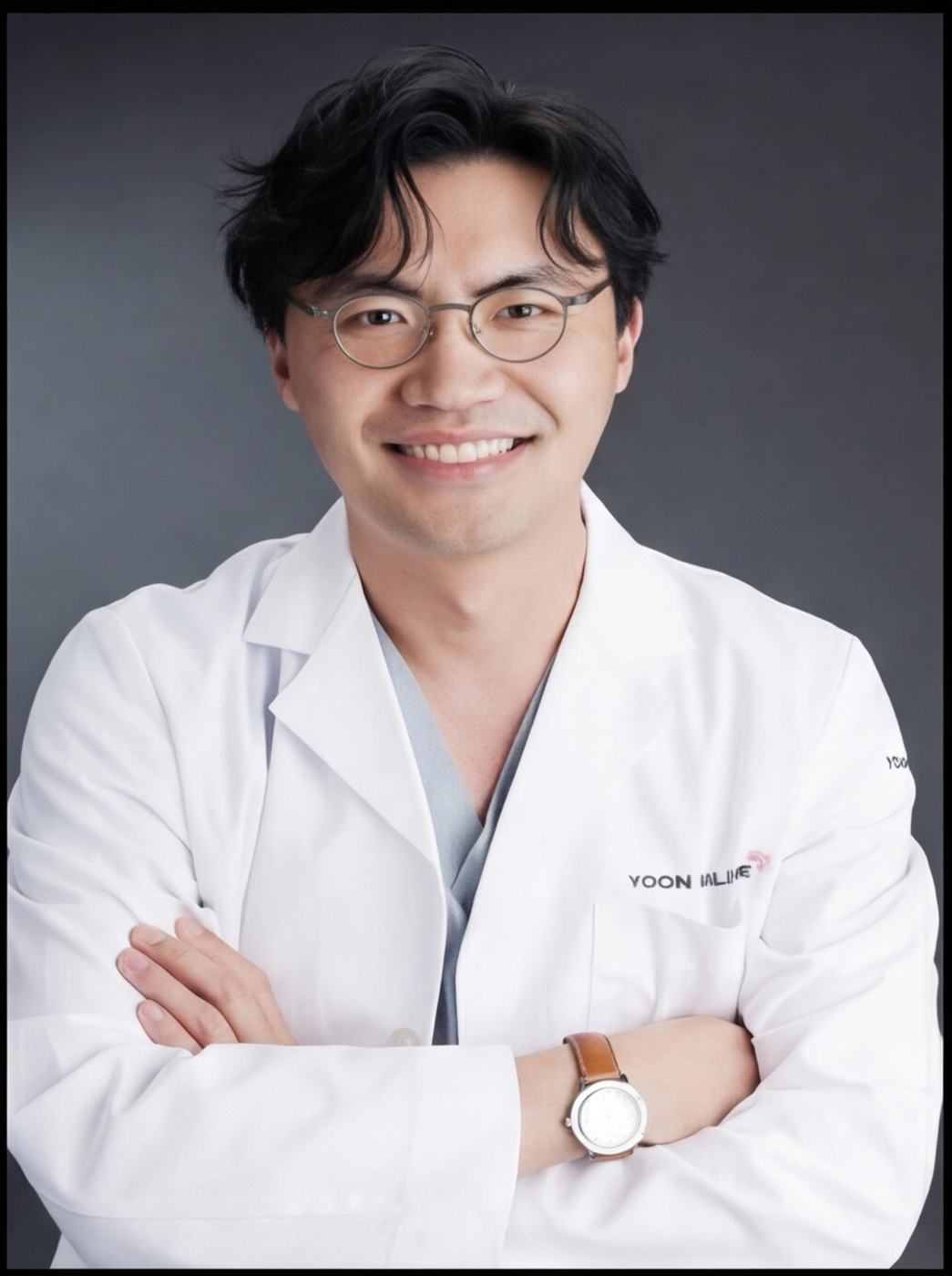
Chief Director Sung Jae Yi, M.D.

Board-Certified Plastic Surgeon · Diplomate of the American Board of Hair Restoration Surgery (ABHRS) · 22 Years in Hair Restoration

  • Began precision FUE (non-strip) surgery in 2005; personally performs both strip (FUT) and FUE (non-strip) procedures
  • Sole author of “Asian Female Hairline Surgery Using Follicular Unit Extraction” (Arch Aesthetic Plast Surg 2014;20(1):52-60)
  • Complete follicular count study of 209 Korean donor areas — Submitted to an international peer-reviewed journal (under review)
  • Presented at ISHRS 2011 · AAHRS 2011 · FUE Palooza 2012 · OSAPS · WCHR 2014
  • Session Chair & Invited Speaker at PRS KOREA 2023 and APS KOREA 2026
  • Co-developed hair-transplant-specific EGF preservation solution (with Daewoong Pharmaceutical research team); developed EASYMO® FUE instrument

FAQ

Frequently Asked Questions

Which medical conferences has Dr. Sung Jae Yi presented at?

His presentations include the 2011 ISHRS Annual Scientific Meeting in Anchorage, live surgery demonstrations at AAHRS the same year, and invited lectures at FUE Palooza (Denver) and OSAPS in 2012, among others.

What is his published peer-reviewed paper?

His 2014 sole-author paper is “Asian Female Hairline Surgery Using Follicular Unit Extraction,” published in Archives of Aesthetic Plastic Surgery (Arch Aesthetic Plast Surg).

Are there procedures or innovations he pioneered in Korea?

Precision FUE (non-strip) procedures in 2005, FUE female hairline restoration in 2007, and fine (vellus-like) hair transplantation in 2008.

Does the Chief Director personally perform the surgery from start to finish?

Yes. Diagnosis, 3D hairline design, mapping onto the forehead, extraction, recipient-site slit creation, implantation, and post-operative follow-up are all personally performed by the Chief Director, a board-certified plastic surgeon with 22 years of experience. The surgical team provides assistance.

My previous hair transplant at another clinic looks unnatural. Is revision surgery possible?

An in-person evaluation is needed to determine eligibility, but Dr. Sung Jae Yi performs staged corrective surgery—first removing unnaturally placed hairs via FUE (non-strip), allowing about 4 weeks for healing, and then redesigning and re-implanting the hairline. When necessary, a second stage is scheduled at least 4–6 months later. New follicles are never implanted into the exact same sites on the day of removal.

Do you also customize hairline design for male hair transplants?

Yes. Male hairlines are designed using 3D scanning and megadata to the exact same level of detail as female hairlines—including transition zone width, temporal corners, and fine hair placement—so the border does not look harsh even with short hair.

Do you recommend strip (FUT) or FUE (non-strip)?

The method is chosen based on what preserves the most hair for each patient. Strip (FUT) is often better suited for moderate-to-advanced megasessions and female crown thinning, whereas FUE (non-strip) is often better suited for female hairline restoration and revision cases. Both methods are performed personally by the Chief Director.

Is EGF used in every surgery?

The EGF preservation solution is used to support the engraftment environment of transplanted follicles and healing at extraction sites, and is especially beneficial for revision cases with scarred scalp tissue. How it is applied is tailored to your scalp condition during consultation.

Why do you quote transplant volumes in individual hairs (“hairs”)?

Because a single follicular unit contains anywhere from 1 to 4 hairs, quoting by follicular unit obscures the actual number of hairs transplanted. Since Koreans average approximately 1.6 hairs per follicular unit (based on direct measurements of 209 cases), applying the Western 2–2.5 benchmark overestimates the actual hair count. Yoon Hairline Clinic quotes exclusively in individual hairs from the very beginning.

What does it mean to serve as session chair and invited speaker?

An invited speaker presents their clinical research and surgical outcomes at an academic conference, while a session chair leads the scientific session, evaluates colleagues’ presentations, and moderates clinical discussion—a role entrusted at congresses of board-certified plastic surgeons only to physicians with a long, peer-verified track record.

Does the Chief Director conduct the consultation personally?

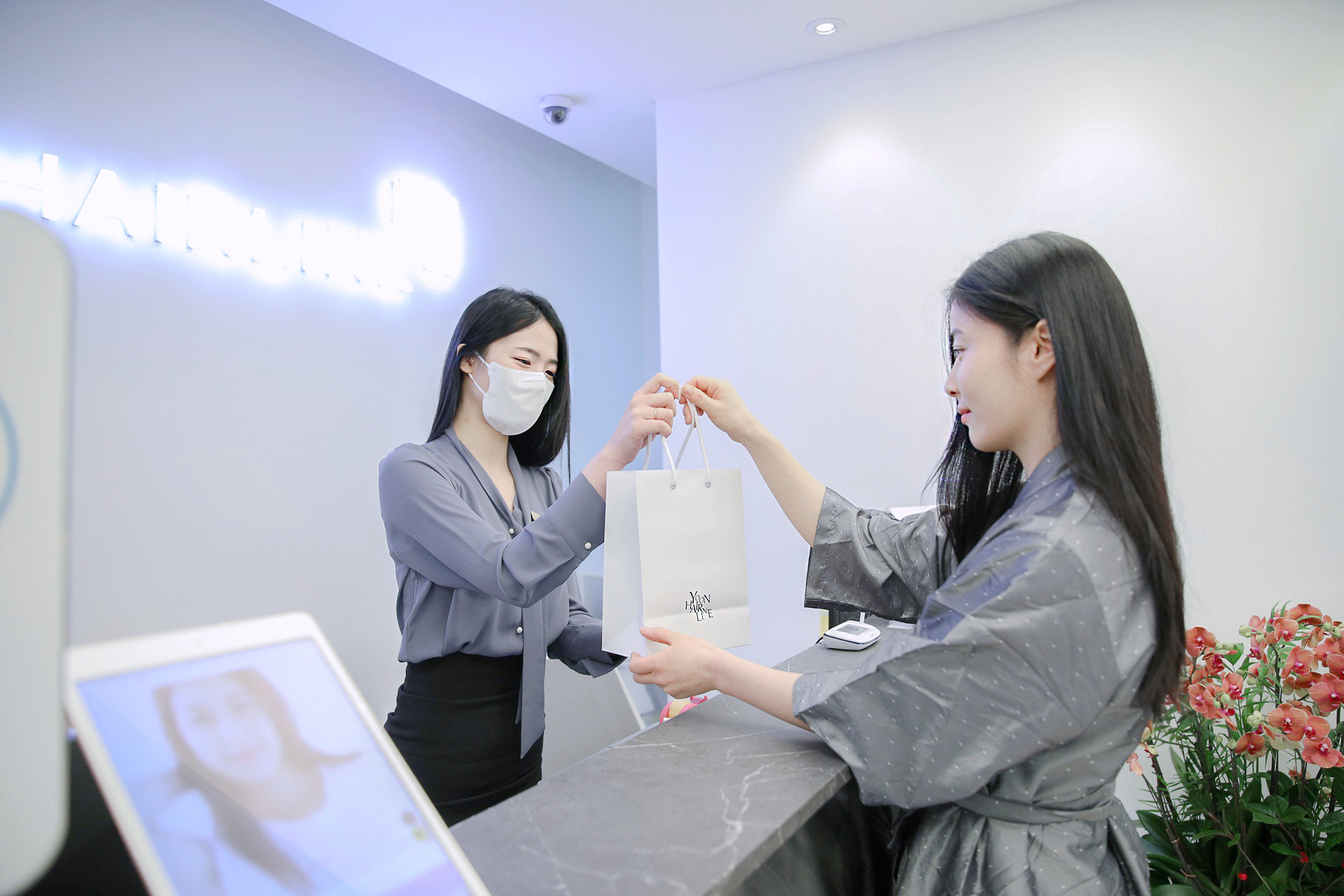
Yes. Diagnostic evaluation and hairline design consultation are conducted personally by the Chief Director, followed by a consultation coordinator who reviews scheduling, pricing, and preoperative instructions.

KNOW-HOW

Even When Shared Openly, It Cannot Simply Be Replicated

What can be shared at an academic congress is the framework of a technique. Even after attending the same lecture and using the same instruments, outcomes differ because true surgical expertise lives not in verbal descriptions, but in the surgeon’s hands and clinical judgment.

Surgical mastery in hair restoration is never built overnight—it is forged through over 20 years of hands-on surgical experience and years of continuous research and peer-reviewed publication.

Every patient who visits Yoon Hairline Clinic receives that accumulated expertise firsthand.
From consultation to the very last hair, Dr. Sung Jae Yi performs every step personally from start to finish.

Yoon Hairline Clinic · Chief Director Sung Jae Yi, M.D. (Diplomate of the American Board of Hair Restoration Surgery (ABHRS)) · 9F Mihye Building, 590 Gangnam-daero, Gangnam-gu, Seoul, South Korea · +82-2-517-7940
The procedural information on this page is provided as a general guide; applicability and results vary depending on each individual’s scalp condition. An accurate assessment requires an in-person clinical evaluation.

상담예약